
Intense itching in both eyes with clear, watery discharge points strongly to allergy, especially when accompanied by sneezing or a runny nose. A bacterial infection usually causes thick, sticky yellow-green discharge, often starts in one eye, and itches much less. When in doubt, a specialist can confirm the cause.
Back to blog
Eye Allergies
Itchy, Watery, Red Eyes? Understanding and Treating Allergic Conjunctivitis
Reviewed by Dr. Sunita Chhapola Shukla
Published: 14 June 2026
Updated: 16 June 2026
5 min read
Clinical Summary
Relentlessly itchy, red, watery eyes are the classic sign of allergic conjunctivitis. Often dismissed as 'eye infection,' it needs a very different approach. Learn the triggers, why you must stop rubbing, and how to find lasting relief.
Itchy eyes that you cannot stop rubbing, accompanied by redness, watering, and a gritty 'something in my eye' sensation, are among the most common and underestimated allergic complaints. Many people self-treat with random eye drops or assume it is an infection. But when both eyes itch intensely and the problem recurs, the diagnosis is almost always allergic conjunctivitis, an allergic inflammation of the thin membrane covering the white of the eye and the inner eyelids.
Allergic Conjunctivitis vs. Eye Infection
Distinguishing an allergy from an infection is essential, because the treatments are completely different. The defining feature of allergy is itch:
- Itching: Intense itching is the hallmark of allergy. Infections itch far less and feel more sore or gritty.
- Both Eyes: Allergies almost always affect both eyes symmetrically. Infections often start in one eye.
- Discharge: Allergies produce clear, watery tears. Bacterial infections produce thick, sticky, yellow-green discharge that glues the lashes.
- Associated Symptoms: Allergic eyes usually come with sneezing, a runny nose, or other allergy symptoms.
- Pattern: Allergic conjunctivitis recurs seasonally or on exposure to specific triggers.
“The most damaging thing a patient with itchy eyes can do is rub them. Rubbing mechanically releases more histamine, worsening the itch, and over time can even harm the cornea. Breaking the itch-rub cycle is half the battle.”— Dr. Sunita Chhapola Shukla
What Triggers Allergic Eyes?
The eyes are directly exposed to airborne allergens, making them one of the first organs to react. The usual culprits in Mumbai are the same perennial triggers that drive nasal allergy: house dust mites, mould spores (which surge during the monsoon), pet dander, and pollen. Because the eyes and nose are connected, allergic conjunctivitis very commonly accompanies allergic rhinitis, a combination often called allergic rhinoconjunctivitis.
How Allergic Conjunctivitis Is Treated
Effective treatment combines avoidance, symptom relief, and, where needed, addressing the underlying allergy:
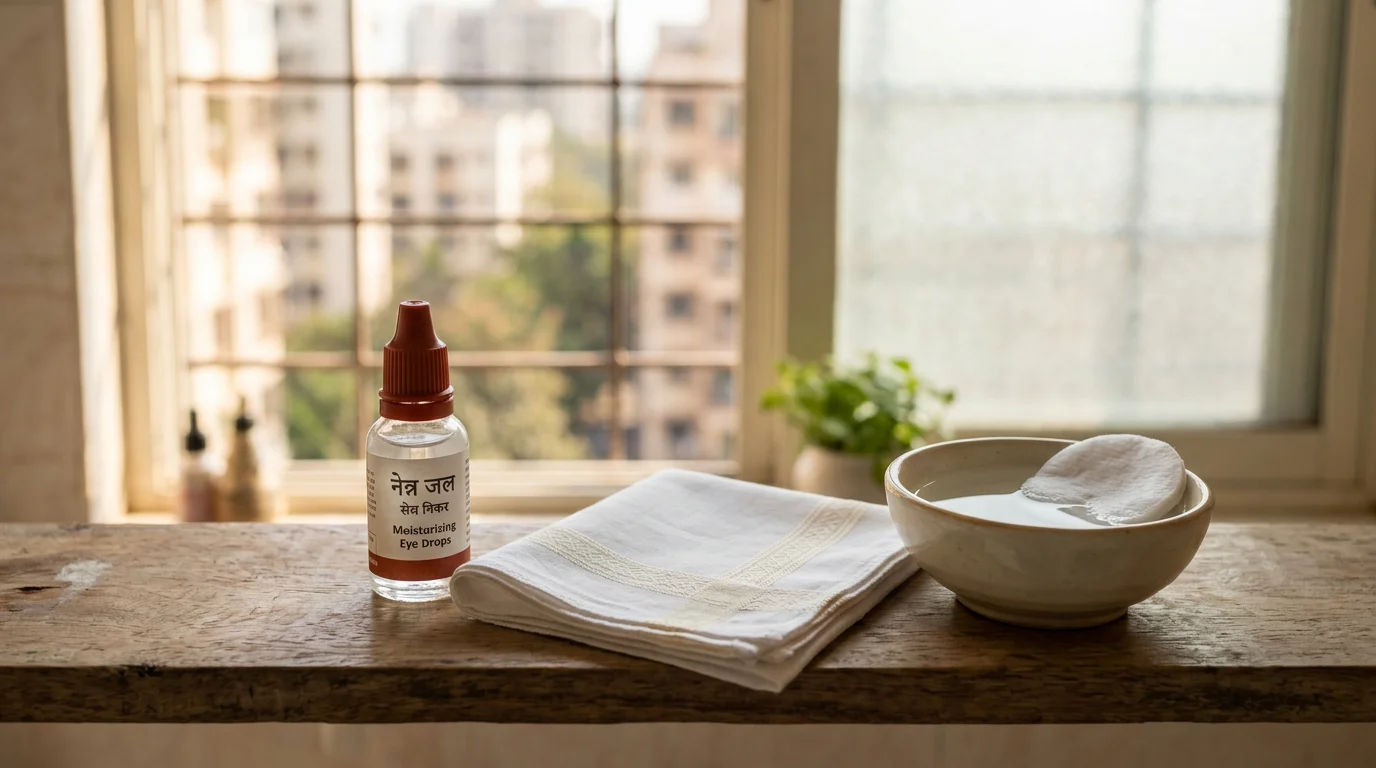
- Cold Compresses: A cold, clean compress over closed eyes provides quick, drug-free relief from itching and swelling.
- Antihistamine & Mast-Cell-Stabiliser Eye Drops: Modern dual-action drops both relieve itching and prevent future flares when used regularly during the season.
- Lubricating Drops: Preservative-free artificial tears flush allergens from the eye surface and soothe irritation.
- Oral Antihistamines: Useful when eye symptoms come with nasal allergy, treating both at once.
- Stop Rubbing & Avoid Triggers: Reducing exposure to dust, pets, and mould, and resisting the urge to rub, dramatically lowers symptom intensity.
When Eye Drops Aren't Enough
If your eye symptoms are severe, recur every season, or persist despite drops, identifying the underlying trigger is the key to lasting relief. A Skin Prick Test confirms exactly what is driving the inflammation. For patients with confirmed environmental allergy, allergen immunotherapy treats the root cause and can substantially reduce both eye and nasal symptoms over time. Persistent or severe eye symptoms should also be reviewed by a specialist to rule out more serious forms of allergic eye disease that can affect the cornea.

Author & Clinical Reviewer
Dr. Sunita Chhapola Shukla
Director of Mumbai Allergy Centre
MS (ENT), DNB, DAA (Gold, Harvard/Boston Food Allergy Centre)
Cited Sources & Medical References
- Leonardi, A. et al. (2019). 'Allergic conjunctivitis: a cross-sectional study.' Clinical and Experimental Allergy, 49(11), 1438-1447.
- Bielory, L. et al. (2020). 'ICON: Diagnosis and management of allergic conjunctivitis.' Annals of Allergy, Asthma & Immunology, 124(2), 118-134.
- Dupuis, P. et al. (2020). 'A contemporary look at allergic conjunctivitis.' Allergy, Asthma & Clinical Immunology, 16, 5.
Q&A
Frequently Asked Questions
Medical clarifications directly from Dr. Sunita Shukla
Frequently Asked Questions
Yes. Rubbing releases more histamine, intensifying the itch and redness, and chronic vigorous rubbing can damage the delicate cornea over time. Use cold compresses and appropriate eye drops instead, and treat the underlying allergy to reduce the urge to rub.
Take Control of Your Health
Don't let allergies hold you back. Consult Dr. Sunita Shukla.
Confirm your allergen triggers with standard in-clinic diagnostics and get a long-term desensitization plan.