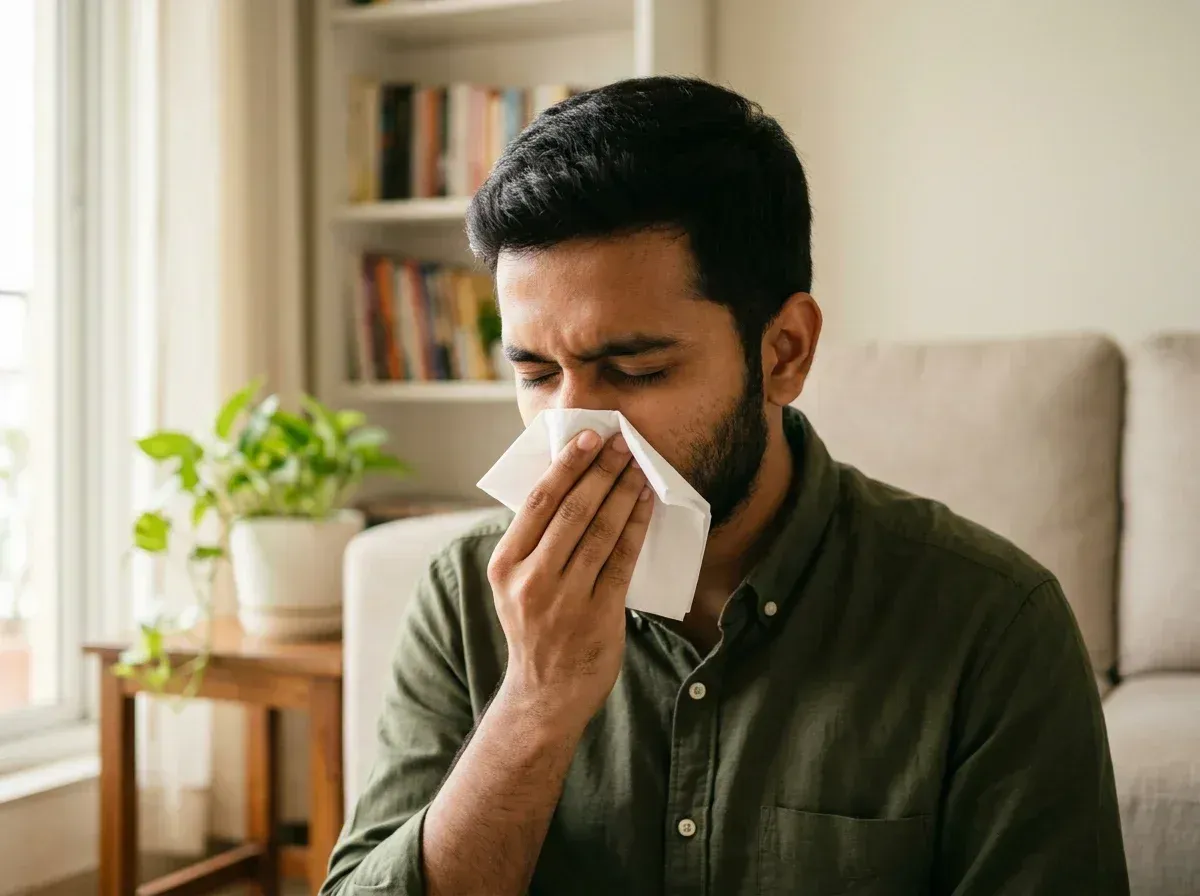
•Sneezing that is worst on waking or when making beds and disturbing soft furnishings
•Chronic nasal congestion and runny nose present year-round
•Itchy nose, eyes, and throat, particularly in the early morning
•Recurrent or chronic asthma symptoms - wheeze, chest tightness, breathlessness
•Worsening eczema (atopic dermatitis) with flares in bedroom environments
•Perennial allergic rhinitis with no clear seasonal variation
•Poor sleep quality and morning fatigue
•Chronic post-nasal drip causing frequent throat clearing and hoarse voice
Causes & Triggers
House dust mites (HDM) - principally Dermatophagoides pteronyssinus and D. farinae - are microscopic arachnids that feed on shed human skin cells and thrive optimally at temperatures of 23–27°C with relative humidity above 70%. Mumbai's climate is ideal for HDM proliferation year-round, with humidity routinely exceeding 80–90% during the monsoon and rarely falling below 60% even in 'dry' months. Studies in Mumbai homes have found HDM levels in mattresses, pillows, sofas, and soft toys that far exceed the sensitisation threshold. Cockroach allergens - highly prevalent in Mumbai's older apartment buildings - frequently co-sensitise patients and cause similar perennial symptoms.
How We Test
Skin prick testing with standardised Dermatophagoides pteronyssinus and D. farinae extracts is the primary confirmatory test. Specific IgE blood testing (Der p 1, Der p 2 components) is an alternative that also allows differentiation of true mite sensitisation from cross-reactive responses. A positive test must always be interpreted in the context of a consistent clinical history of perennial nasal symptoms.
Allergen avoidance is the first essential step: encasing mattresses, pillows, and duvets in allergen-impermeable microfibre covers, washing bedding weekly in hot water (60°C), removing or reducing carpets and heavy curtains, reducing indoor humidity with dehumidifiers and improved ventilation, and regular HEPA vacuuming. Pharmacological control uses intranasal corticosteroids as first-line, with antihistamines for additional symptom relief. HDM allergen immunotherapy - via subcutaneous injection (SCIT) or sublingual drops/tablets (SLIT) - is the only treatment that modifies the immune response and provides long-term benefit, reducing medication use by up to 60%.
See an allergist if you experience year-round nasal symptoms, morning sneezing, or worsening asthma in bedroom environments - especially if avoidance measures and antihistamines provide only partial relief.
Frequently Asked Questions
No - dust mites are 0.2–0.3 mm in size and completely invisible to the naked eye. They live deep within mattress fibres, pillows, sofas, and carpets. You cannot see or feel them, but a standard allergy skin prick test can confirm within 15 minutes whether your immune system has become sensitised to their proteins.
Dust mites cannot survive when relative humidity falls below 40–50%. In dry cities like Delhi in winter or Rajasthan, mite populations collapse seasonally. In Mumbai's coastal climate, humidity almost never drops to mite-lethal levels - meaning populations remain high year-round. This explains why perennial allergic rhinitis is disproportionately prevalent in Mumbai.
Yes, but only if washed at 60°C or above - hot water kills mites and denatures their allergen proteins. Washing at 30–40°C removes some allergen but does not kill the mites. Allergen-impermeable mattress and pillow encasings are even more important, as they prevent mite allergen from reaching the sleeper.
Some patients with HDM allergy also react to shellfish (prawns, crabs, lobster) - a phenomenon called the 'mite-shellfish syndrome', caused by cross-reactive proteins (tropomyosin) shared between crustaceans and mites. If you notice shellfish reactions alongside nasal allergy, mention both to your allergist.
Yes - HDM immunotherapy is well established in India. Both subcutaneous (injection) and sublingual (drops or dissolving tablets) forms are available at specialist allergy centres in Mumbai. Treatment over 3 years has been shown to reduce symptom scores and medication use by 50–60% and provides lasting benefit for several years after stopping.
Take the next step
Living with dust allergy? Let’s find your trigger.