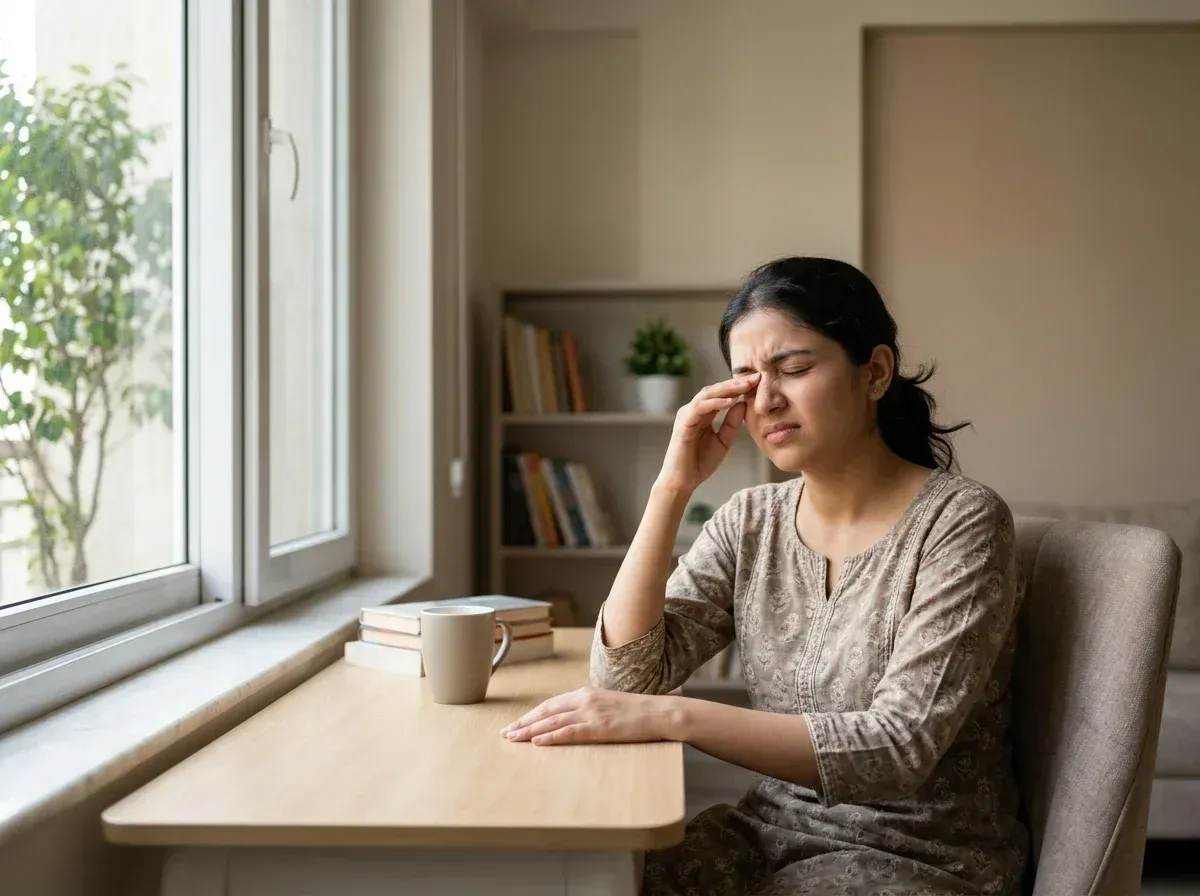
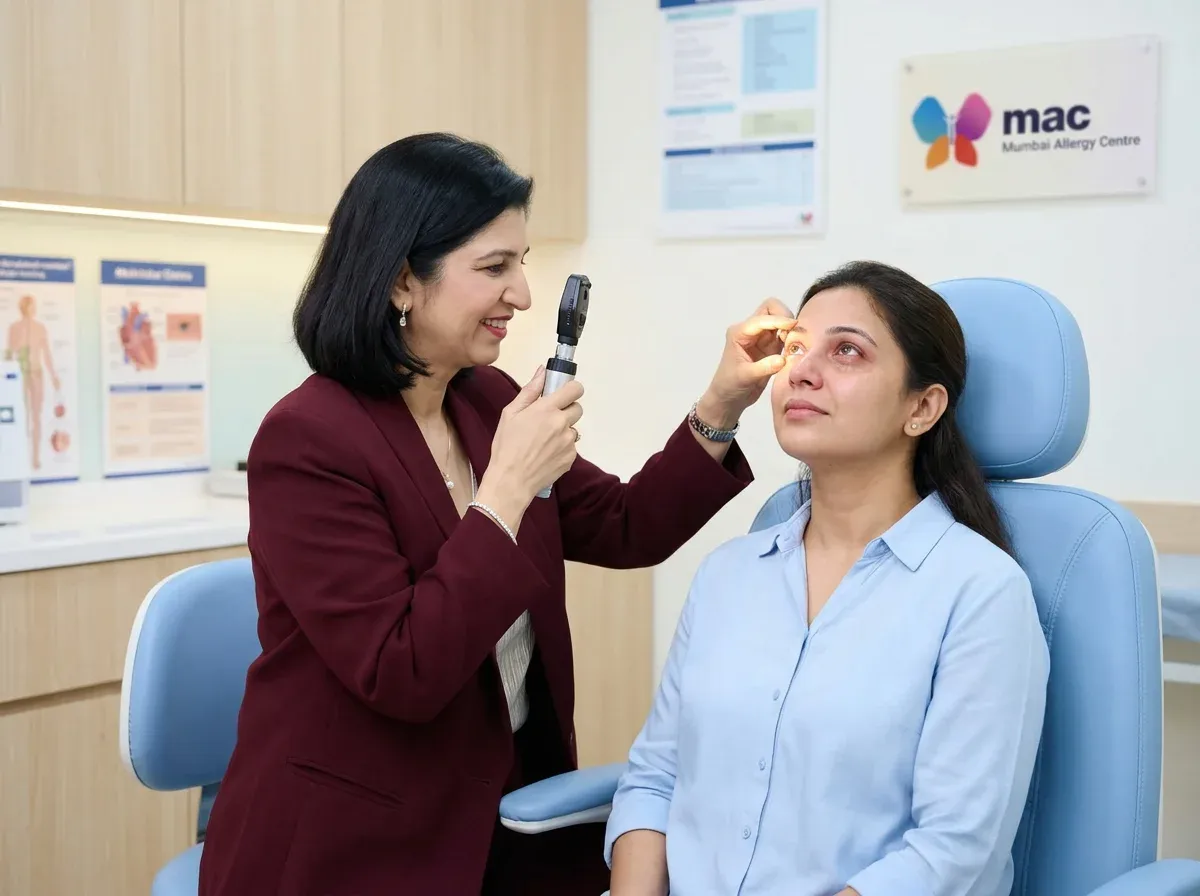
•Intense bilateral eye itching (the hallmark symptom)
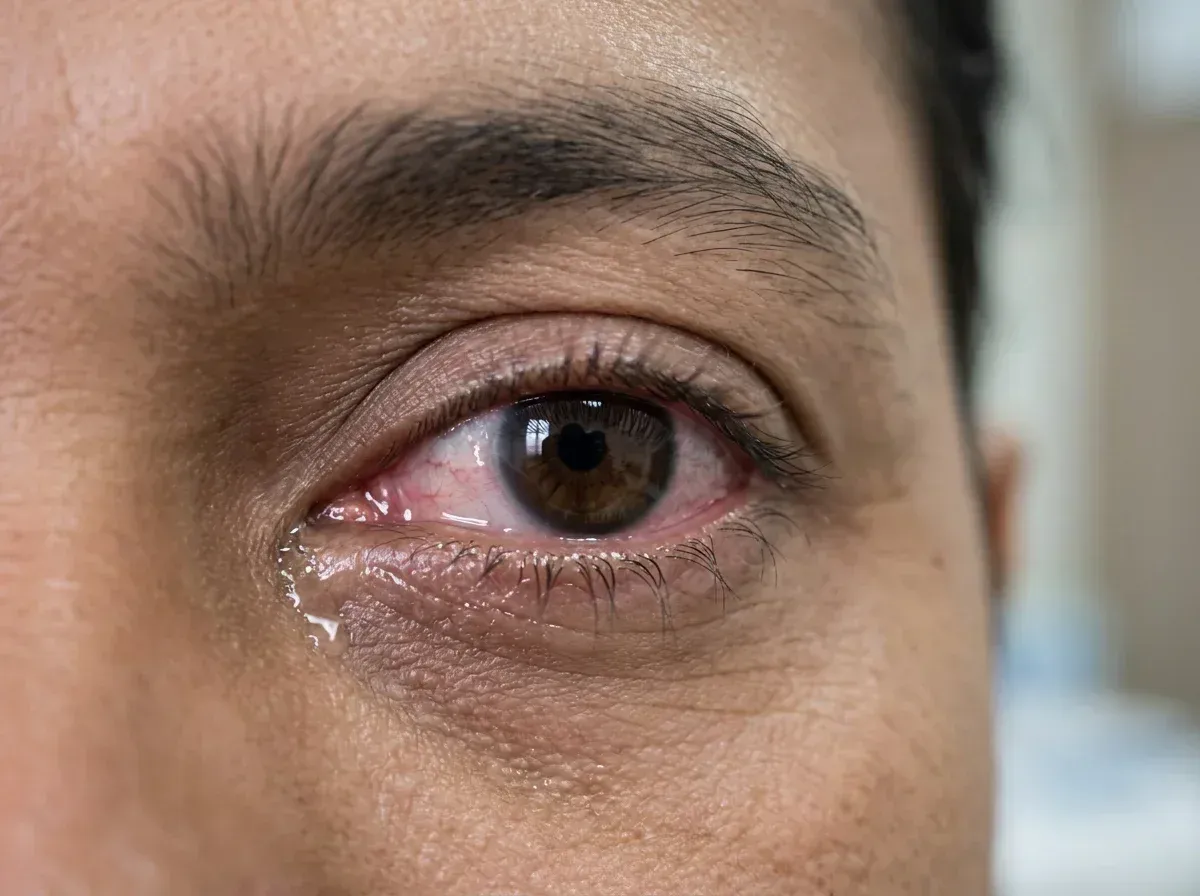
•Redness and visible blood vessels across the white of the eye
•Profuse watery or stringy mucoid eye discharge
•Eyelid swelling and puffiness, especially on waking
•Sensation of grittiness or a foreign body in the eye
•Photophobia (sensitivity to bright light)
•Blurred vision due to discharge film over the cornea
•Frequent eye rubbing that worsens the reaction
Causes & Triggers
Allergic conjunctivitis in Mumbai is most commonly triggered by airborne allergens that contact the conjunctival surface directly - house dust mites, cockroach frass, Aspergillus and Cladosporium mould spores proliferating during the monsoon, and fine particulate matter (PM2.5) from vehicular pollution that acts as both an allergen carrier and an irritant. Seasonal peaks occur in pre-monsoon months (March–May) when dry winds carry high pollen loads from Parthenium and acacia species across the city. Contact lens wearers and individuals who spend time outdoors in heavy traffic are particularly susceptible.
How We Test
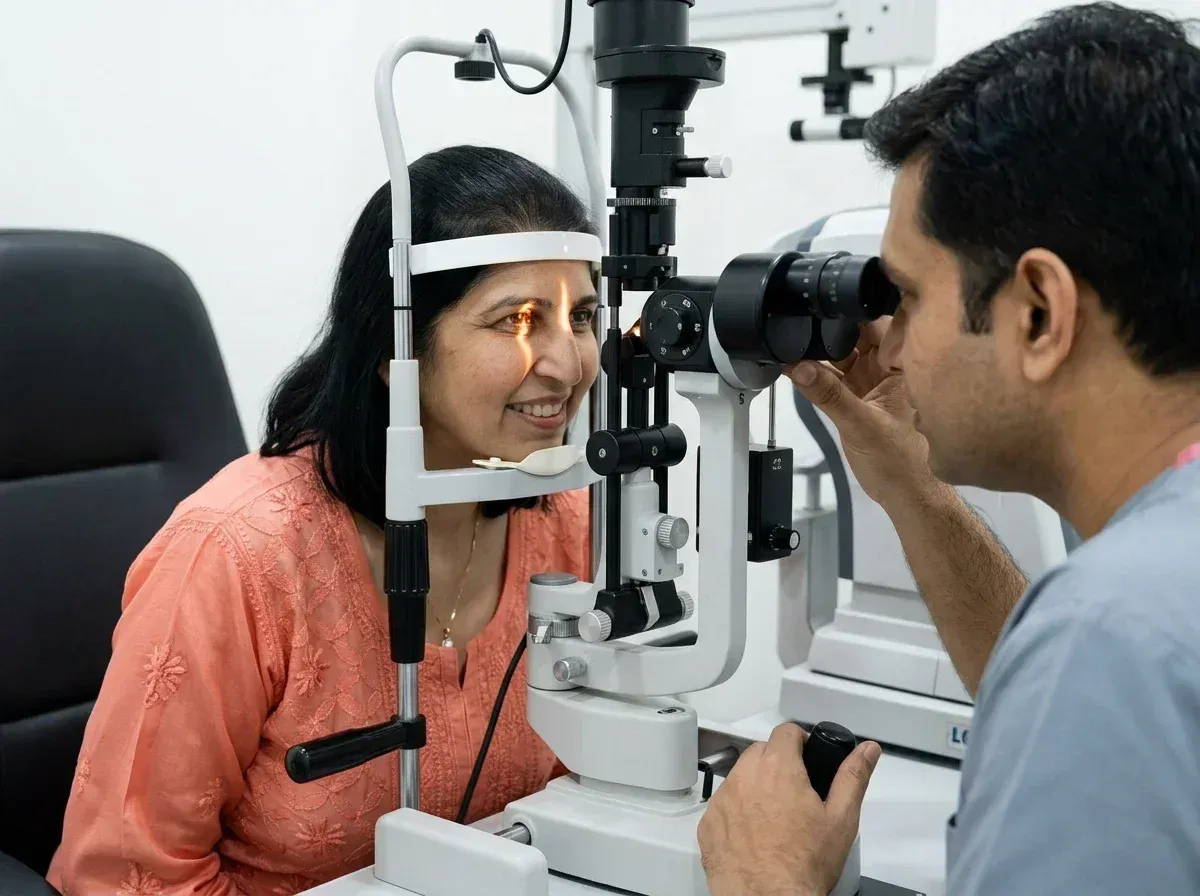
Diagnosis is primarily clinical, based on characteristic bilateral itching and papillary reaction on the inner surface of the upper eyelid (seen on slit-lamp biomicroscopy). Skin prick testing or specific IgE blood tests identify the causative allergen. Conjunctival scraping for eosinophils may be performed in atypical cases to rule out infections or vernal keratoconjunctivitis (VKC), a more severe form common in young males in India.
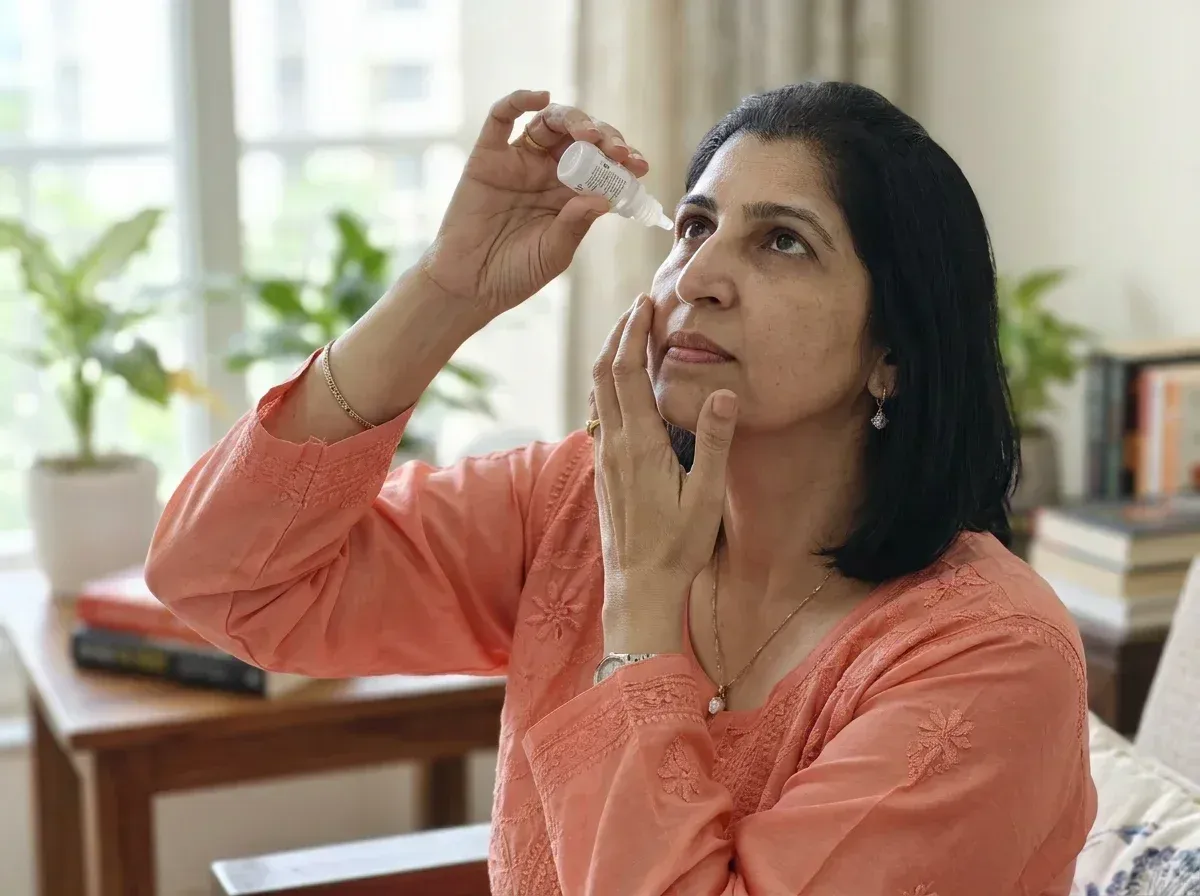
Topical antihistamine/mast-cell stabiliser eye drops (olopatadine, ketotifen, azelastine) applied twice daily provide rapid relief and are the cornerstone of treatment. Oral second-generation antihistamines help when symptoms are systemic. Cold compresses reduce eyelid swelling; patients should be strongly counselled against eye rubbing, which degrades mast cells and worsens inflammation. For severe or recurrent cases, allergen immunotherapy targeting the identified trigger provides sustained long-term control.
Seek medical attention if eye redness is accompanied by significant pain, vision changes, yellow-green discharge, or if symptoms do not improve within 48 hours of starting eye drops.
Frequently Asked Questions
Allergic conjunctivitis always causes intense itching, affects both eyes simultaneously, and produces clear or stringy white discharge - not pus. Infectious conjunctivitis often starts in one eye, spreads, and produces yellow-green discharge. Fever and a recent cold suggest infection. An allergist or ophthalmologist can distinguish the two with a brief examination.
Mumbai's traffic pollution deposits fine particles of diesel soot, tyre rubber, and road dust directly onto the conjunctiva. These particles carry bound allergens and irritate the eye's surface, lowering the threshold for an allergic reaction. Wraparound sunglasses significantly reduce direct particle contact when outdoors.
VKC is a more severe, chronic form of allergic conjunctivitis most common in young males in tropical countries including India. It can cause large cobblestone papillae on the inner eyelid and, if untreated, corneal scarring. It requires specialist care beyond standard antihistamine drops - often including immunomodulating drops and allergen immunotherapy.
Many over-the-counter decongestant eye drops (e.g. naphazoline) cause rebound redness with regular use and are not recommended. Specific antihistamine/mast-cell stabiliser drops prescribed by an allergist are both safer and far more effective. Never use corticosteroid eye drops without a doctor's prescription.
Seasonal forms may reduce with avoidance, but perennial allergic conjunctivitis driven by year-round triggers like dust mites rarely resolves without treatment. Allergen immunotherapy has been shown to reduce eye symptoms significantly and can induce long-term tolerance.
Take the next step
Living with allergic conjunctivitis? Let’s find your trigger.