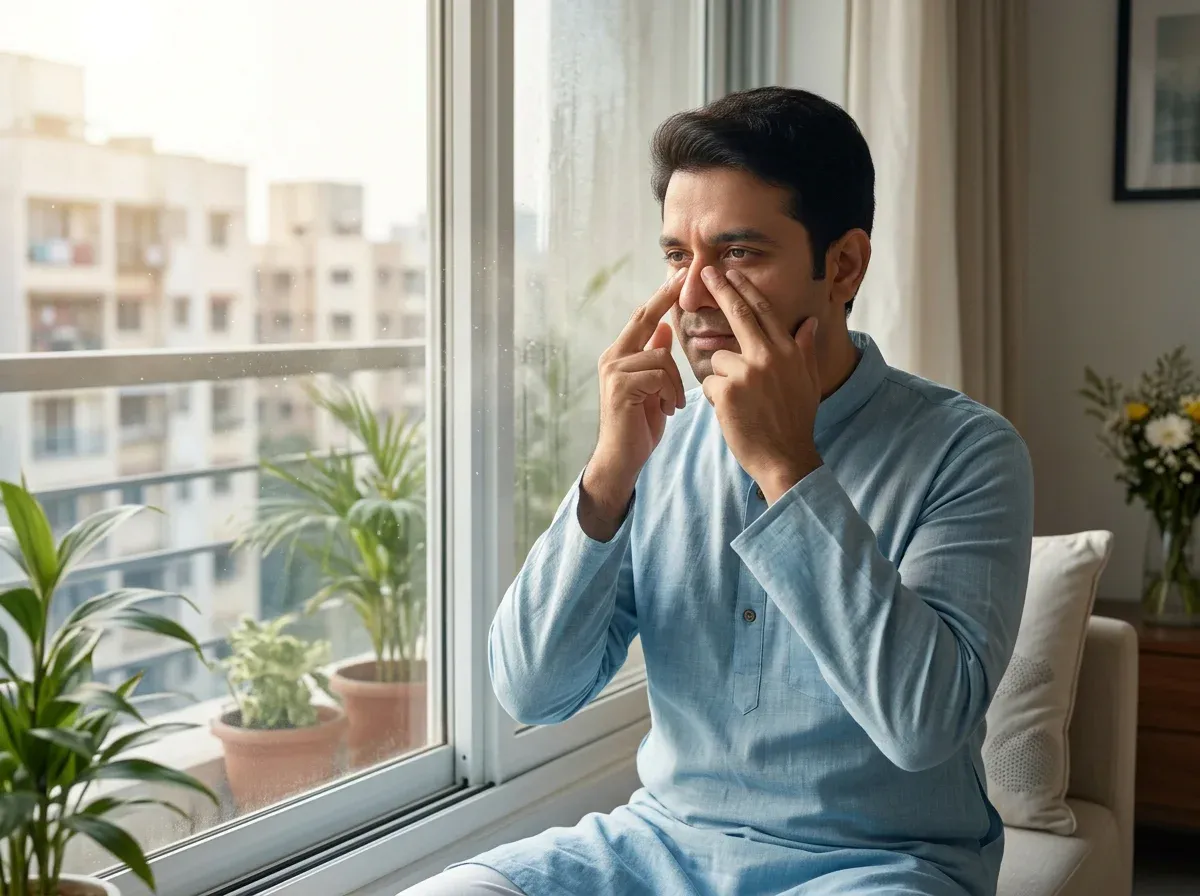
•Facial pain or pressure around the cheeks, forehead, or between the eyes
•Thick yellow or green nasal discharge (acute) or persistent post-nasal drip (chronic)
•Nasal blockage and difficulty breathing through the nose
•Reduced or lost sense of smell and taste
•Headache that worsens on bending forward
•Tooth pain or upper jaw aching (maxillary sinusitis)
•Ear fullness or pressure and muffled hearing
•Fatigue and low-grade fever (in acute bacterial sinusitis)
Causes & Triggers
In Mumbai, chronic sinusitis is most frequently the downstream consequence of untreated allergic rhinitis - persistent nasal inflammation obstructs the sinus drainage openings, allowing mucus to stagnate and become infected. The city's year-round high humidity and monsoon mould burden (Aspergillus species are particularly relevant, causing allergic fungal sinusitis in sensitised individuals) are major contributors. Repeated upper respiratory infections, swimming pool chlorine exposure, and a deviated nasal septum - prevalent in up to 20% of the population - further predispose Mumbai residents to recurrent sinusitis.
How We Test
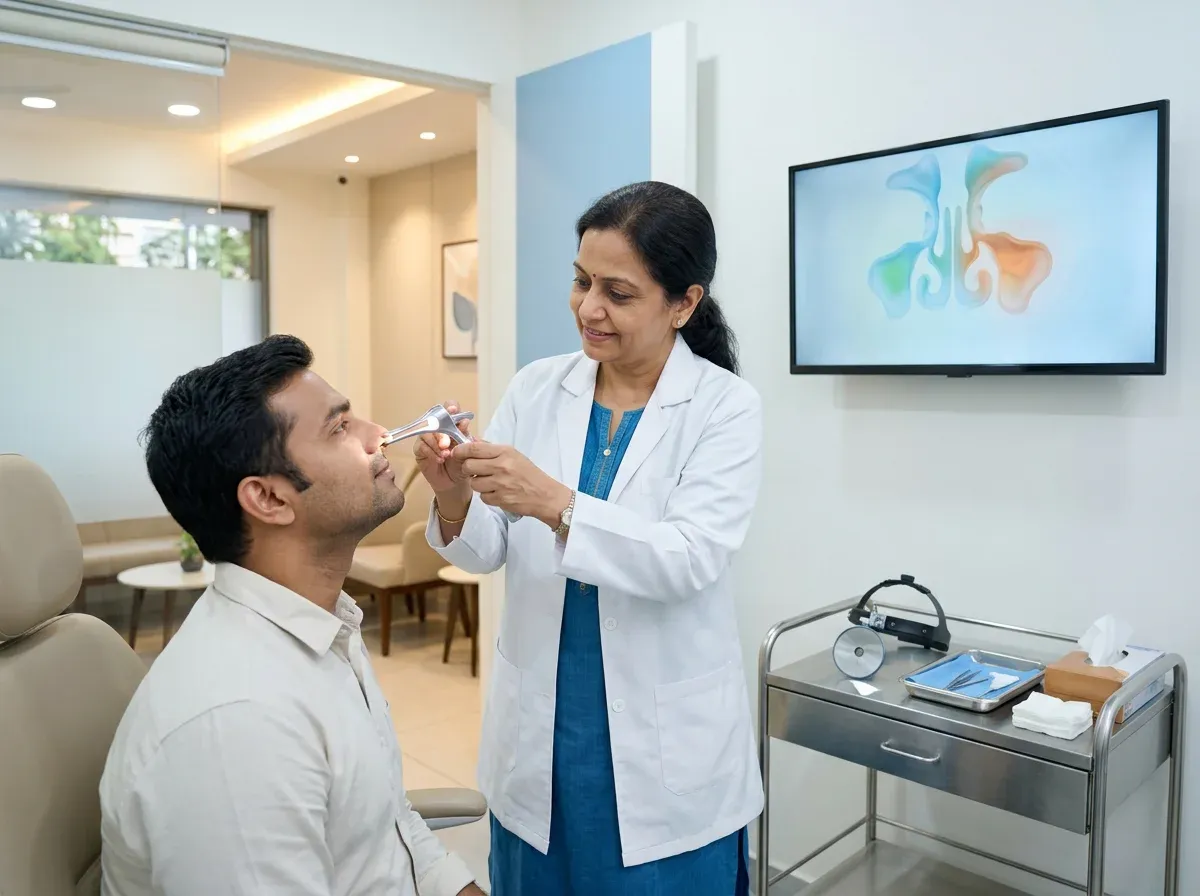
Diagnosis is confirmed by nasal endoscopy to directly visualise the osteo-meatal complex, complemented by a CT scan of the paranasal sinuses (coronal and axial cuts) which identifies mucosal thickening, polyps, fluid levels, and anatomical variants. Allergy skin prick testing is essential in chronic or recurrent cases to identify the allergic trigger driving the cycle. Nasal swab culture and sensitivity guides antibiotic selection in acute bacterial exacerbations.
Allergic sinusitis requires treatment of the underlying rhinitis alongside sinus-directed therapy - intranasal steroids, large-volume saline nasal irrigation (NeilMed technique) twice daily, and short courses of antibiotics for proven bacterial superinfection. When medical treatment fails or significant structural obstruction is present, Functional Endoscopic Sinus Surgery (FESS) restores normal drainage; allergen immunotherapy is then continued post-operatively to prevent polyp recurrence.
See a doctor if facial pain and nasal symptoms persist beyond 10 days without improvement, if you develop a high fever with severe headache or swelling around the eye, or if sinusitis recurs more than four times per year.
Frequently Asked Questions
True sinusitis headache is caused by blocked, infected sinuses and is accompanied by nasal discharge, facial tenderness, and pressure. Most 'sinus headaches' are actually migraines - migraines can cause facial pressure and nasal symptoms through the trigeminal nerve. An allergist or neurologist can differentiate the two, as treatment is completely different.
Absolutely. Pollutants such as PM2.5, sulphur dioxide, and ozone damage the cilia that clear mucus from the sinuses, impair the mucosal immune barrier, and promote inflammation - all of which make the sinuses more susceptible to infection and slower to heal. Air purifiers indoors and N95 masks on heavily polluted days are practical protective measures.
Yes. A deviated septum that narrows the middle meatus can obstruct sinus drainage and predispose to recurrent sinusitis on the affected side. However, surgery alone (septoplasty) does not cure allergic sinusitis - the underlying allergy must be treated simultaneously to prevent recurrence.
Yes - large-volume saline irrigation (250 ml per nostril, isotonic or hypertonic solution) is one of the most evidence-based non-drug treatments for chronic sinusitis. It physically removes allergens, mould spores, and bacteria, reduces mucosal swelling, and improves mucociliary clearance. It is safe for daily use and particularly valuable during Mumbai's monsoon season.
FESS is recommended when 8–12 weeks of optimal medical treatment (intranasal steroids, saline irrigation, allergy treatment) fails to control symptoms, or when CT scan reveals large nasal polyps or significant structural obstruction. Surgery improves drainage but does not cure the underlying allergy - immunotherapy is important after surgery.