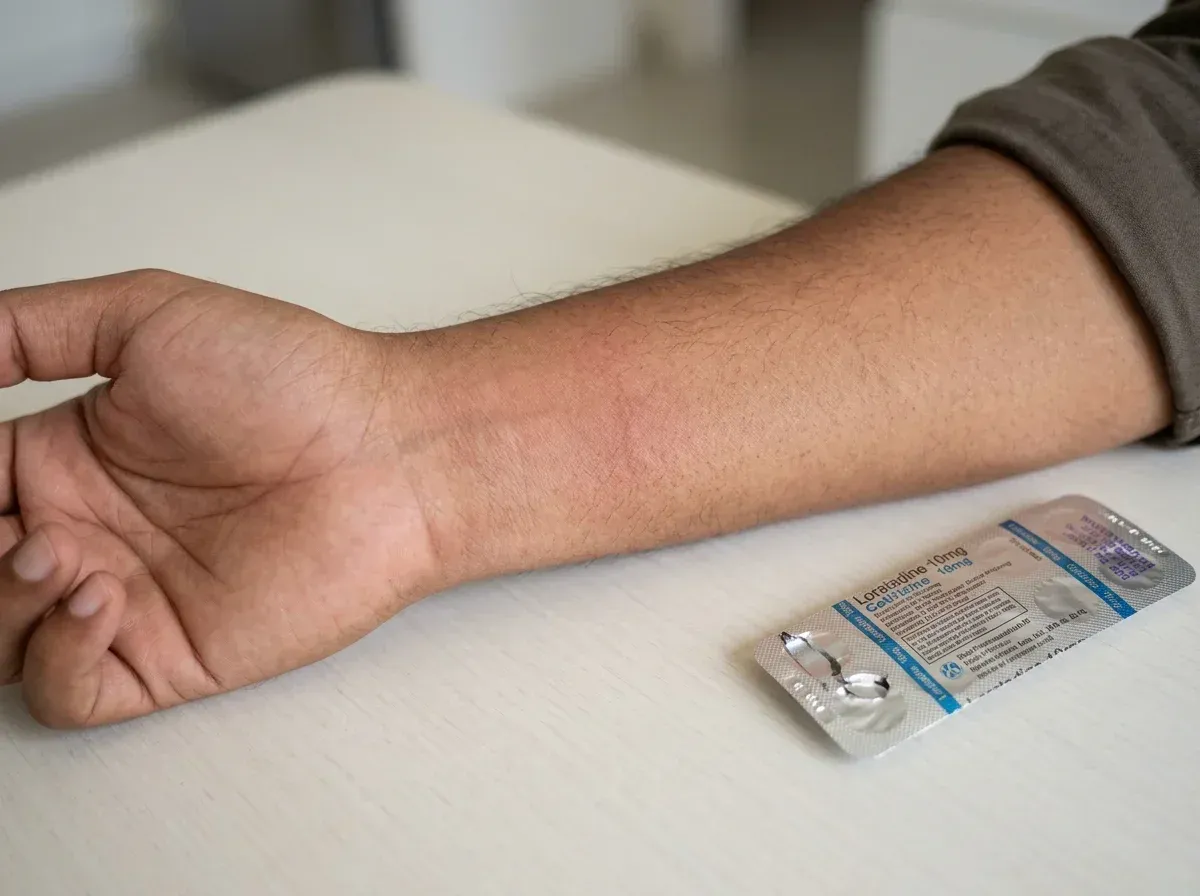
•Skin rash or hives (urticaria) appearing after taking a medication
•Itching all over the body
•Facial, lip or tongue swelling (angioedema)
•Wheezing or breathing difficulty
•Runny nose and watery eyes
•Fever with rash (drug fever)
•Blistering or peeling skin (Stevens-Johnson Syndrome in severe cases)
•Drop in blood pressure or dizziness (anaphylaxis)
Causes & Triggers
Drug allergies occur when the immune system mistakenly identifies a medication as a harmful foreign substance and mounts an IgE-mediated or cell-mediated response. In India, penicillin and its derivatives (ampicillin, amoxicillin) are among the most frequently reported culprits, partly due to widespread over-the-counter antibiotic use and incomplete courses of treatment that sensitise the immune system. NSAIDs such as aspirin and ibuprofen - used heavily across India for fever and pain - are the second leading cause, along with sulfonamides, quinolones, and contrast dyes used in diagnostic imaging. In Mumbai, self-medication and polypharmacy in the context of comorbid conditions like diabetes and hypertension significantly increase sensitisation risk.
How We Test
Diagnosis begins with a detailed drug history and timeline linking drug exposure to symptom onset. Skin-prick testing and intradermal testing are the gold-standard in-vivo methods for penicillin and certain other drugs, offering high sensitivity when performed by trained allergists. Where skin tests are inconclusive, graded oral drug challenge (provocation testing) under supervised hospital conditions is performed; serum-specific IgE (ImmunoCAP) and basophil activation tests (BAT) are increasingly available in Mumbai's tertiary centres as adjuncts.
The first step is immediate discontinuation of the offending drug and substitution with a structurally unrelated alternative wherever possible. Mild reactions (urticaria, pruritus) are managed with antihistamines and short-course oral corticosteroids. Severe or anaphylactic reactions require intramuscular adrenaline (epinephrine), intravenous fluids, and hospital observation; patients are thereafter prescribed a self-injectable adrenaline auto-injector (EpiPen) and a Medical Alert card listing the culprit drug. For patients who have no safe therapeutic alternative, drug desensitisation - a supervised protocol of escalating doses - can induce temporary tolerance.
Consult an allergist immediately if you develop hives, swelling, or breathing difficulty within minutes to hours of taking any medication.
Frequently Asked Questions
No. A side effect is a predictable, dose-related reaction (e.g., nausea from antibiotics) that can occur in anyone. A drug allergy is an immune-mediated reaction that is unpredictable, can occur at any dose, and only affects people whose immune system has been sensitised to that specific drug.
Not necessarily. Up to 80% of patients lose their penicillin allergy over 10 years. Studies suggest that less than 20% of people labelled 'penicillin-allergic' in India have a true IgE-mediated allergy on formal testing. We can perform graded skin testing to confirm whether it is now safe for you to take it.
Possibly not - amoxicillin shares the same beta-lactam ring as penicillin, and up to 10% of people with a confirmed penicillin allergy cross-react with amoxicillin. An allergist can perform graded skin testing to assess your specific cross-reactivity risk safely before prescribing.
Drug intolerance is a non-immune pharmacological reaction (e.g., aspirin causing stomach upset) that does not involve the immune system and is generally not life-threatening. A true drug allergy involves the immune system and can cause anaphylaxis. Distinguishing the two is important because patients with intolerance can often safely use the same drug with dose adjustment or premedication.
Yes. Mumbai Allergy Centre offers comprehensive drug allergy evaluation including skin-prick testing, intradermal tests, and supervised oral drug provocation challenges. Testing is performed in a monitored setting with full resuscitation facilities to ensure patient safety.
Take the next step
Living with drug allergy? Let’s find your trigger.