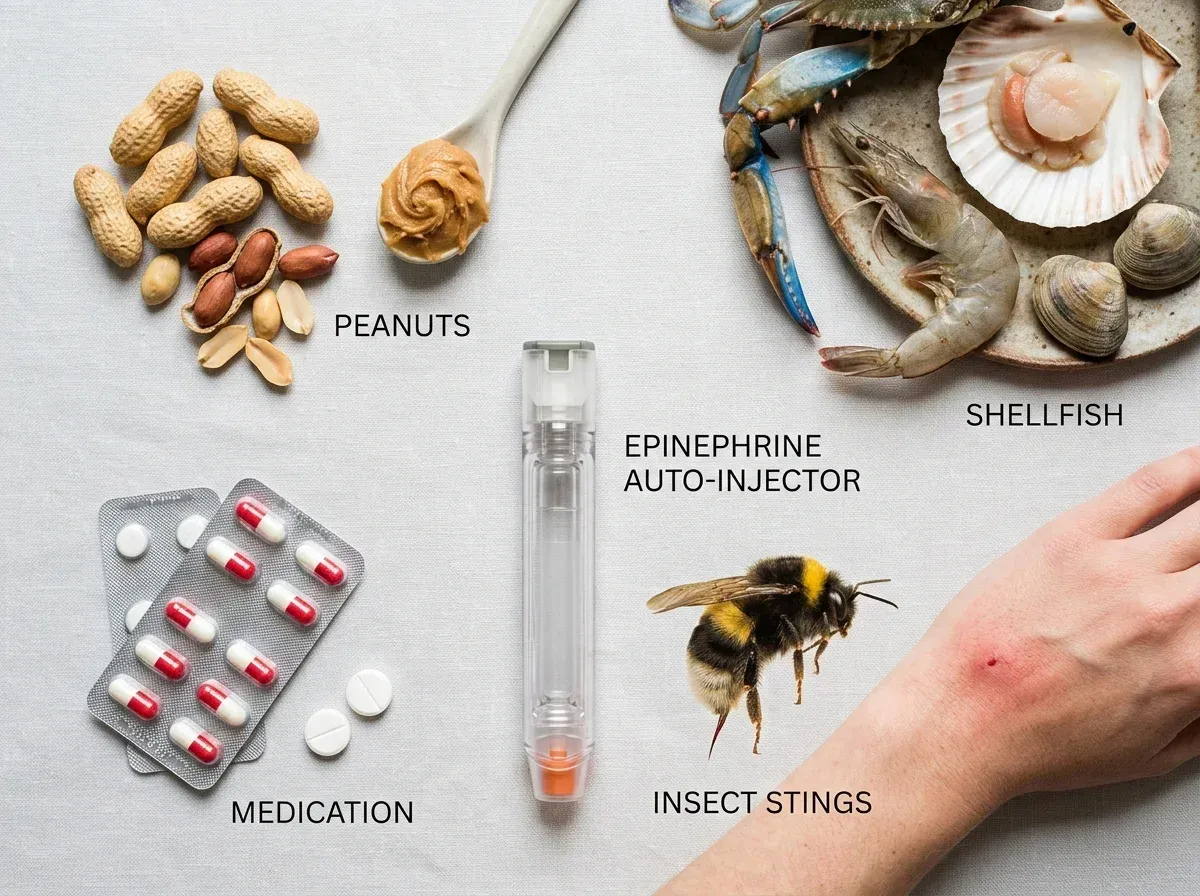
Anaphylaxis is triggered when a previously sensitised person re-encounters an allergen, causing massive IgE-mediated mast cell degranulation and systemic histamine release. In India and Mumbai the most common triggers are foods (peanuts, tree nuts, shellfish, cow's milk, wheat), insect stings (honeybee stings are especially prevalent during the monsoon season from June–September when bees are disturbed by flooding and construction), and drugs - particularly penicillin injections given in primary care settings. Latex allergy is an occupational risk for healthcare workers in Mumbai hospitals. Exercise-induced and idiopathic anaphylaxis are underdiagnosed in India due to low awareness.
How We Test
Diagnosis is primarily clinical: the World Allergy Organization (WAO) criteria require involvement of at least two organ systems within minutes of allergen exposure. Serum tryptase levels (drawn within 1–4 hours of the reaction) confirm mast cell activation and are used in ambiguous cases. After the acute event, comprehensive allergy testing (specific IgE ImmunoCAP, skin-prick testing) is performed to identify the trigger and guide future avoidance strategies.
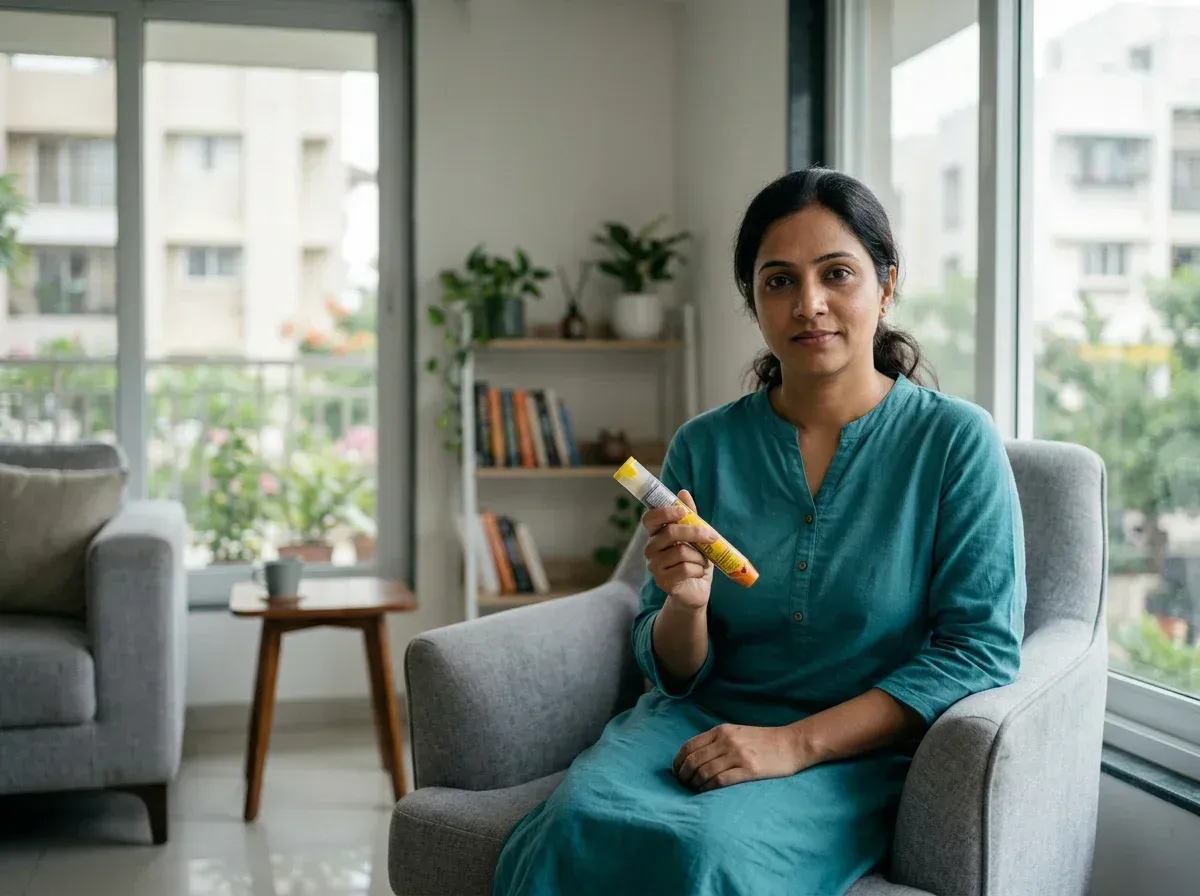
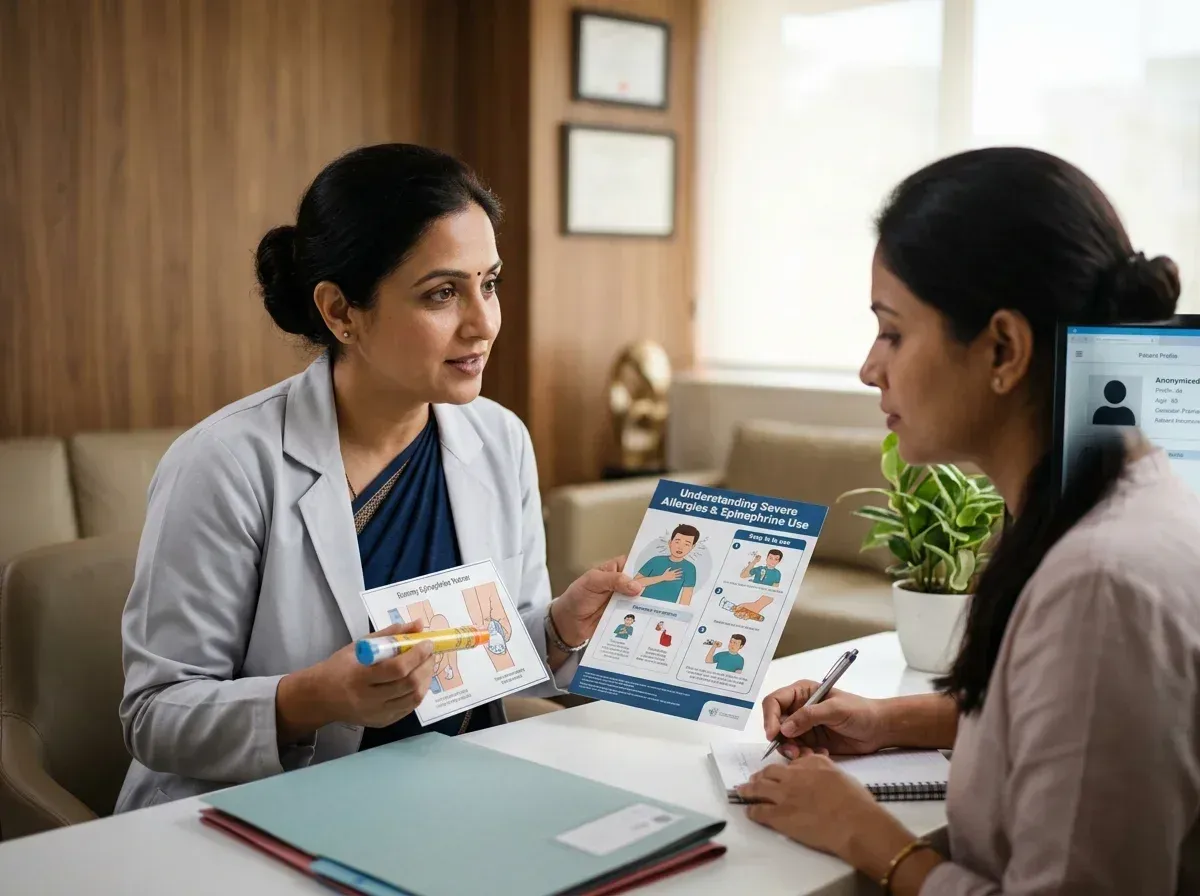
Intramuscular adrenaline (0.3–0.5 mg of 1:1000 solution, anterolateral mid-thigh) is the definitive first-line treatment and must be given without delay - antihistamines and steroids are secondary and must never substitute adrenaline. All patients who recover from anaphylaxis must be observed in hospital for 4–24 hours to monitor for a biphasic reaction (recurrence 4–12 hours later). Long-term management includes prescription of a self-injectable adrenaline auto-injector, a written anaphylaxis action plan, allergen avoidance education, and referral to an allergist for trigger identification.
Call emergency services (dial 112) immediately during any suspected anaphylaxis episode, and follow up with an allergist within days of recovery.
Frequently Asked Questions
Inject adrenaline (epinephrine) into the outer thigh immediately using an auto-injector if available, then call 112 or rush to the nearest emergency department. Do not wait to see if symptoms improve - anaphylaxis can become fatal within minutes without treatment. Antihistamines alone are never sufficient.
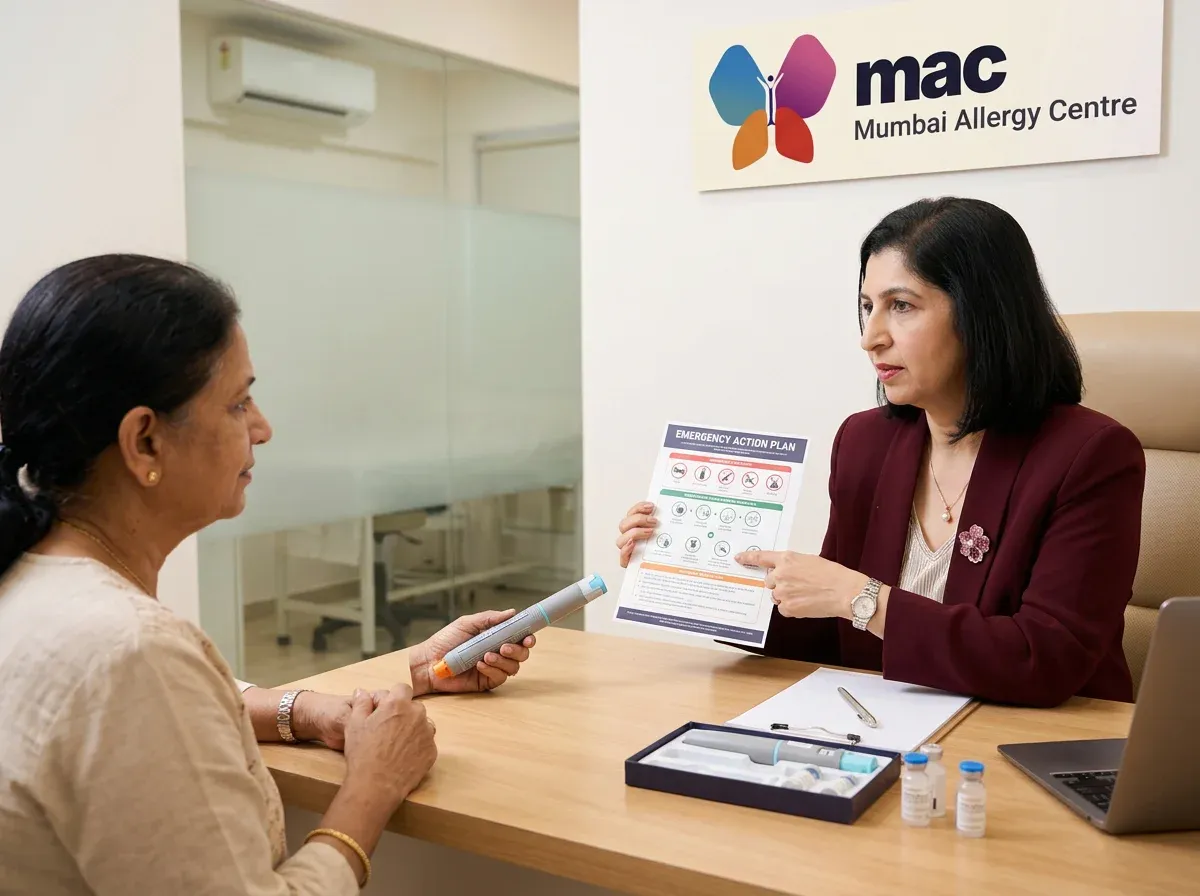
Yes, brands such as EpiPen and Emerade are available in India and can be prescribed by a registered allergist or physician. Mumbai Allergy Centre routinely prescribes auto-injectors with device-training sessions to ensure patients and their family members use them correctly.
A biphasic reaction is a second wave of anaphylaxis that occurs 4–12 hours after the initial episode, even without further allergen exposure. It occurs in roughly 5–20% of cases, which is why all anaphylaxis patients are kept under hospital observation for at least 4–6 hours after stabilisation.
Yes, once you have safely recovered, we conduct precise testing - specific IgE ImmunoCAP and skin-prick testing - to identify the exact trigger to prevent future occurrences. This is one of the most important steps after surviving anaphylaxis, as knowing your trigger allows effective avoidance and potentially curative immunotherapy.
Yes - food-triggered anaphylaxis is the leading cause of anaphylaxis in Indian children, with cow's milk, peanuts, and tree nuts being the top culprits. Many cases in India go unrecognised because symptoms like vomiting and diarrhoea are attributed to gastroenteritis rather than an allergic reaction.