
Both. Pollution clearly worsens existing allergies and asthma by inflaming the airways and amplifying the allergic response. There is also growing evidence that long-term exposure, especially in childhood, can contribute to the development of new allergic sensitisation by damaging the airway's protective barrier.
Back to blog
Seasonal
Air Pollution and Allergies in Mumbai: Why Winter Smog Makes Your Symptoms Worse
Reviewed by Dr. Sunita Chhapola Shukla
Published: 17 June 2026
Updated: 17 June 2026
6 min read
Clinical Summary
When Mumbai's air quality plummets in winter, allergy and asthma patients suffer the most. Pollution doesn't just irritate the airways, it actively amplifies allergic inflammation. Learn the science and the practical steps to protect yourself.
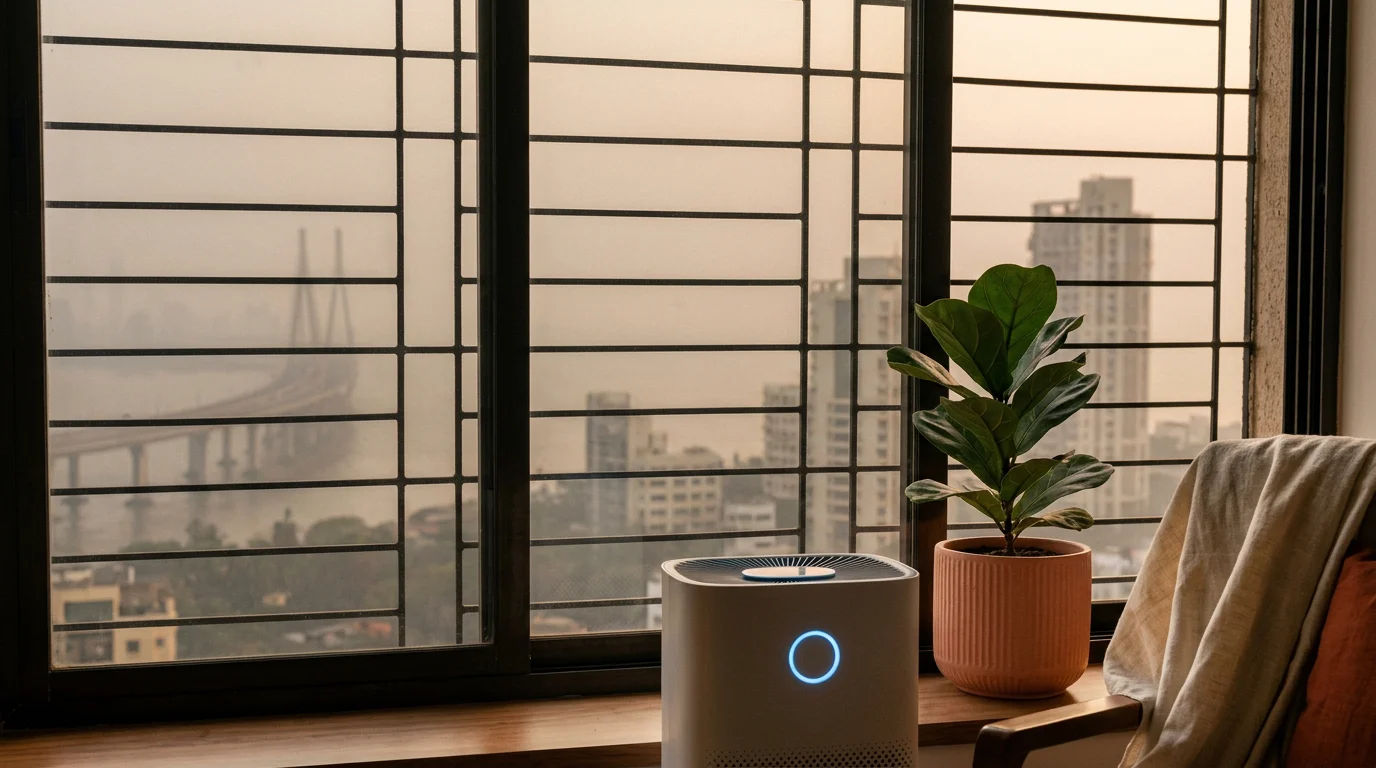
Mumbai's air quality has become a recurring winter headline, with the Air Quality Index (AQI) frequently slipping into 'poor' and 'very poor' ranges from November to February. For the general public, this means hazy skylines and a scratchy throat. But for the millions living with allergic rhinitis and allergic asthma, polluted air is far more than a nuisance, it actively intensifies allergic inflammation, turning manageable symptoms into daily distress.
How Pollution and Allergies Amplify Each Other
Air pollution does not merely sit alongside allergies, it makes the allergic response measurably worse through several distinct mechanisms. The most harmful component is fine particulate matter (PM2.5), particles so small they bypass the nose's natural filters and penetrate deep into the lungs and even the bloodstream. The effects compound one another:
- Barrier Damage: Pollutants injure the protective lining of the nose and airways, making it easier for allergens to penetrate and sensitise the immune system.
- Amplified Inflammation: Particulate matter primes the airways, so the same dose of dust mite or pollen allergen triggers a stronger inflammatory reaction than it would in clean air.
- More Potent Pollen: Pollutants can chemically alter pollen grains, making their allergenic proteins more aggressive and more likely to provoke symptoms.
- Direct Irritation: Even without allergy, pollutants irritate the airways, causing coughing, throat irritation, and chest tightness that stack on top of allergic symptoms.
“Pollution acts like an accelerant on allergic disease. It both lowers your airway's defences and increases the firepower of the allergens you breathe in, a double hit that pushes many stable patients into flare-ups every winter.”— Dr. Sunita Chhapola Shukla
Why Mumbai's Winter Is the Danger Zone
Unlike the monsoon, when rain washes pollutants from the air, Mumbai's winter creates ideal conditions for pollution to accumulate. Cooler temperatures cause a phenomenon called temperature inversion, where a layer of warm air traps cooler, polluted air close to the ground. Combined with lower wind speeds, vehicular emissions, construction dust, and regional crop-burning haze, this means pollutants linger instead of dispersing. The result is the recurring winter smog that coincides precisely with a spike in respiratory and allergy clinic visits across the city.
Who Is Most at Risk?
While polluted air affects everyone, certain groups experience disproportionately severe effects and should take extra precautions:
- Asthmatics: Pollution is a leading trigger of asthma attacks and emergency visits during smog episodes.
- Children: Their airways are still developing and they breathe faster, inhaling more pollutant per kilogram of body weight.
- The Elderly: Reduced lung reserve makes older adults more vulnerable to flare-ups.
- Existing Allergy Sufferers: Those with allergic rhinitis or chronic sinus disease feel the combined burden most acutely.
Practical Steps to Protect Your Airways
You cannot control the city's air, but you can substantially reduce your personal exposure and keep your airways calm through the smog season:
- Check the AQI Daily: On high-pollution days, limit prolonged outdoor exertion, especially morning and evening exercise near traffic.
- Use a Proper Mask: A well-fitted N95/FFP2 mask filters fine particulate matter; ordinary cloth masks do not.
- Run an Indoor Air Purifier: A HEPA-grade purifier in the bedroom meaningfully lowers indoor PM2.5 and allergen levels.
- Keep Windows Shut During Peak Smog: Ventilate during cleaner parts of the day rather than during rush-hour pollution peaks.
- Stay on Your Controller Medication: Do not stop nasal sprays or asthma inhalers during the smog season, consistent use prevents flares.
- Nasal Saline Rinses: Rinsing the nose helps flush out trapped pollutants and allergens at the end of the day.
Treat the Underlying Allergy
Pollution makes allergies worse, but the underlying allergic sensitivity is what you can actually treat. Identifying your specific triggers with a Skin Prick Test and bringing the allergy under control, through medication or, for suitable patients, allergen immunotherapy, builds resilience so that polluted air provokes a smaller reaction. To understand how the opposite season affects you, read our companion guide on monsoon allergies in Mumbai. If your cough or breathlessness worsens every winter, a focused evaluation at our Dadar clinic can help you stay ahead of the smog season.

Author & Clinical Reviewer
Dr. Sunita Chhapola Shukla
Director of Mumbai Allergy Centre
MS (ENT), DNB, DAA (Gold, Harvard/Boston Food Allergy Centre)
Cited Sources & Medical References
- Guarnieri, M. & Balmes, J. R. (2014). 'Outdoor air pollution and asthma.' The Lancet, 383(9928), 1581-1592.
- Burbank, A. J. et al. (2017). 'Environmental determinants of allergy and asthma in early life.' Journal of Allergy and Clinical Immunology, 140(1), 1-12.
- D'Amato, G. et al. (2020). 'The effects of climate change on respiratory allergy and asthma induced by pollen and mold allergens.' Allergy, 75(9), 2219-2228.
Q&A
Frequently Asked Questions
Medical clarifications directly from Dr. Sunita Shukla
Frequently Asked Questions
Yes. A good HEPA-grade air purifier meaningfully reduces indoor fine particulate matter (PM2.5) and airborne allergens such as dust and pet dander. Placing one in the bedroom, where you spend many hours, offers the greatest benefit, especially during winter smog episodes.
Take Control of Your Health
Don't let allergies hold you back. Consult Dr. Sunita Shukla.
Confirm your allergen triggers with standard in-clinic diagnostics and get a long-term desensitization plan.