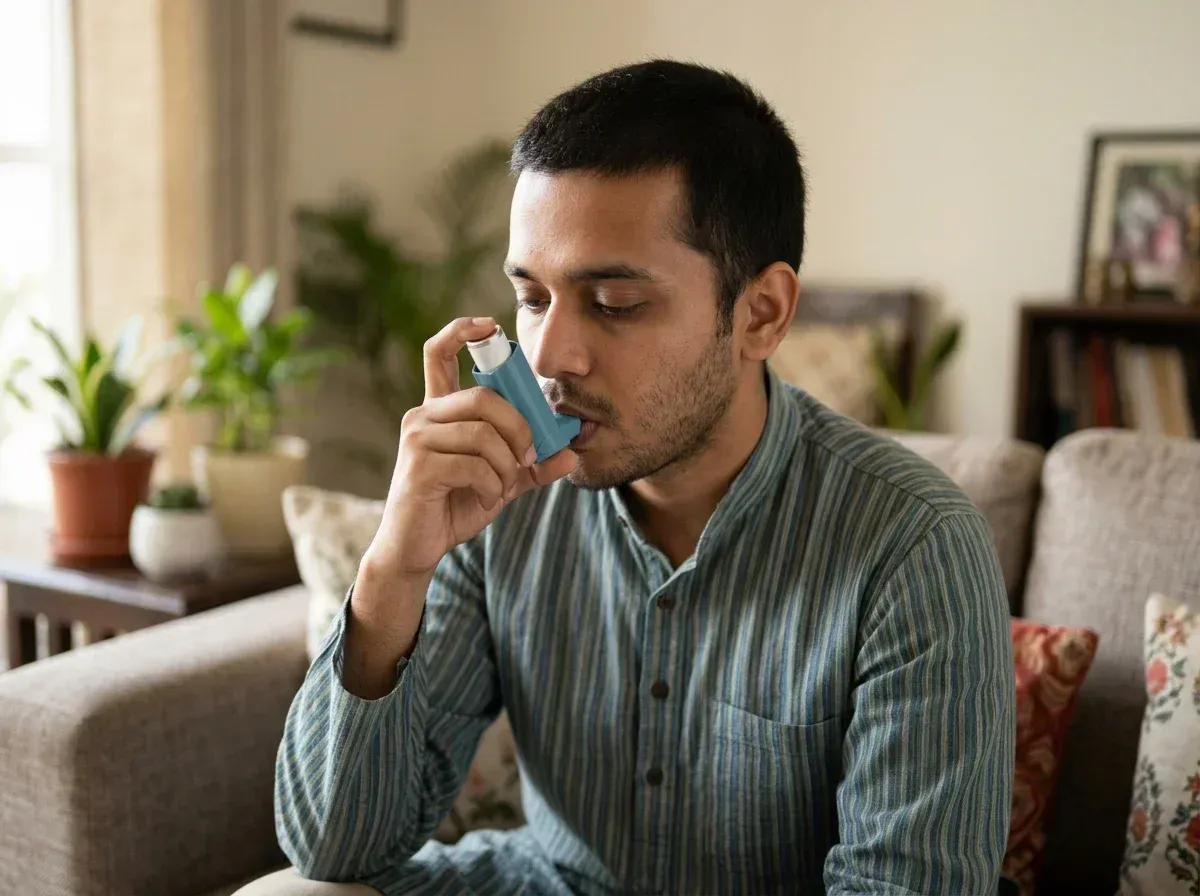
•Recurrent wheezing or whistling sound while breathing
•Shortness of breath, especially on exertion or at night
•Chest tightness or heaviness
•Persistent dry cough, often worse at night or early morning
•Symptoms worsening during Mumbai monsoon (mould spores) or winter smog
•Coughing or breathlessness triggered by exercise
•Rapid deterioration on exposure to dust, smoke, or strong perfumes
•Disturbed sleep due to nocturnal coughing or breathing difficulty
Causes & Triggers
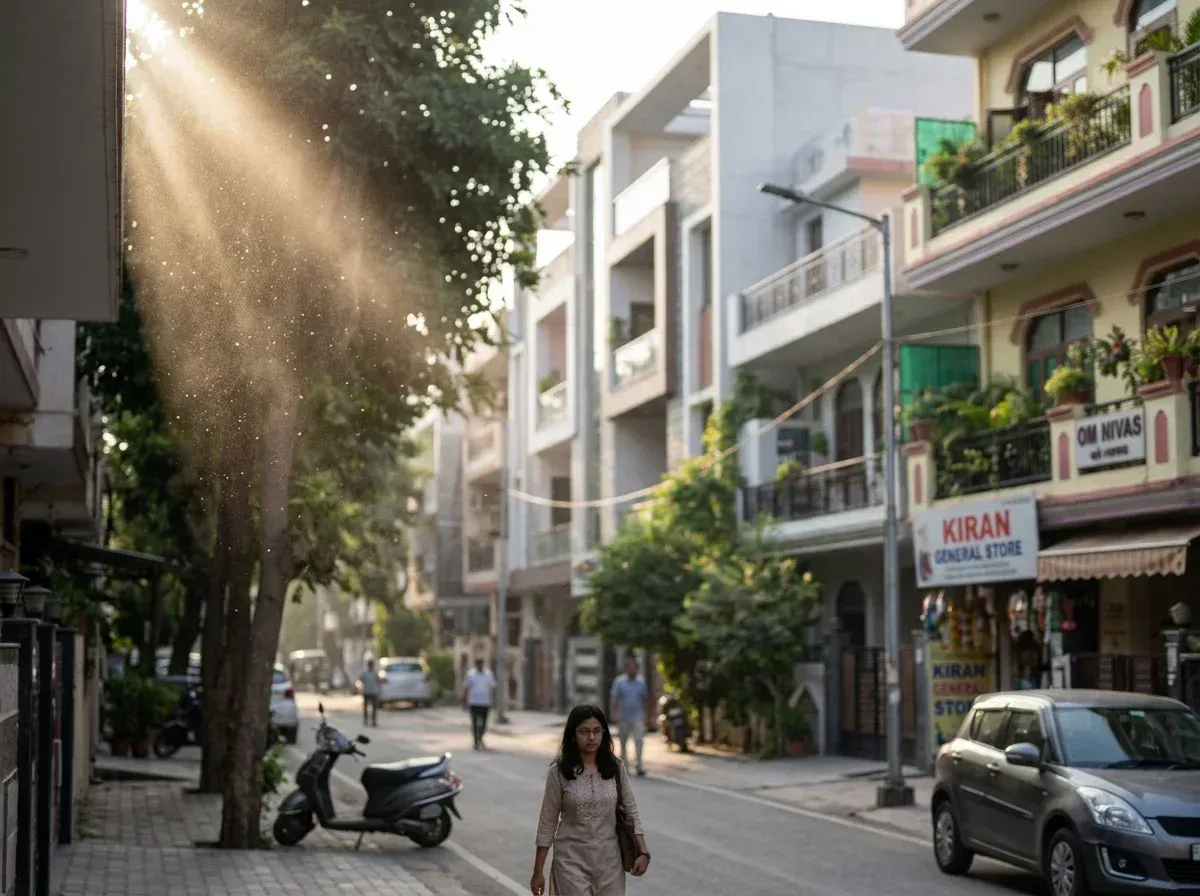
Allergic asthma in Mumbai is primarily driven by house dust mites (HDM) - Dermatophagoides pteronyssinus and D. farinae - which thrive in the city's year-round humidity, especially during and after the monsoon. Cockroach allergen is a major sensitiser in dense urban housing, and Alternaria and Aspergillus mould spores peak during the monsoon. Outdoor air pollution - Mumbai's PM2.5 frequently exceeds WHO safe limits - acts as both a trigger and an enhancer of allergic sensitisation. Pollen from Parthenium weed (congress grass) and prosopis contributes to seasonal flares in February–April, while occupational allergens (flour, latex, chemicals) are relevant for Mumbai's large working population.
How We Test
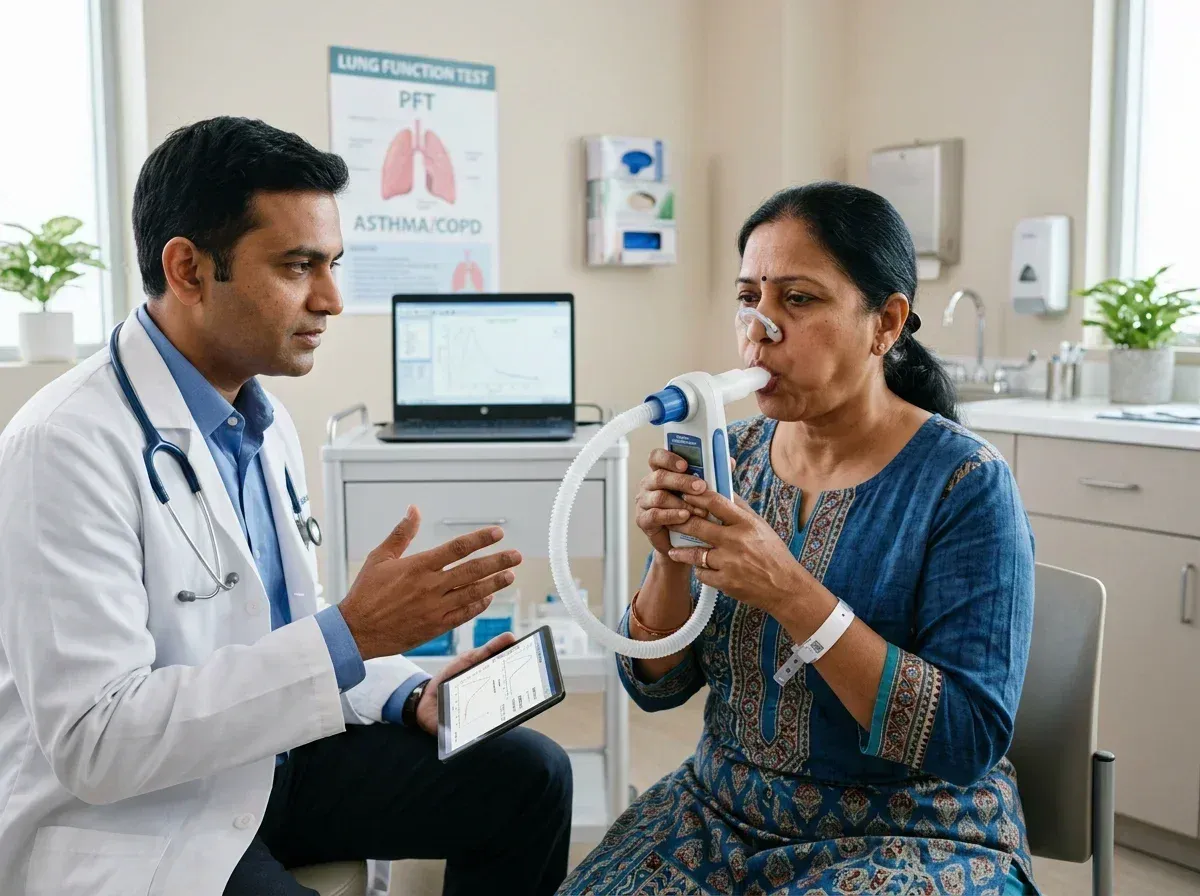
Skin prick testing (SPT) with a panel of Indian aeroallergens - HDM, cockroach, moulds, local pollens, and animal danders - confirms sensitisation. Spirometry with bronchodilator reversibility (≥12% and 200 mL FEV₁ improvement) establishes the asthma diagnosis, and FeNO (fractional exhaled nitric oxide) measurement quantifies eosinophilic airway inflammation. Specific IgE (ImmunoCAP) blood testing is used when SPT is not feasible, and a chest X-ray excludes structural lung disease.
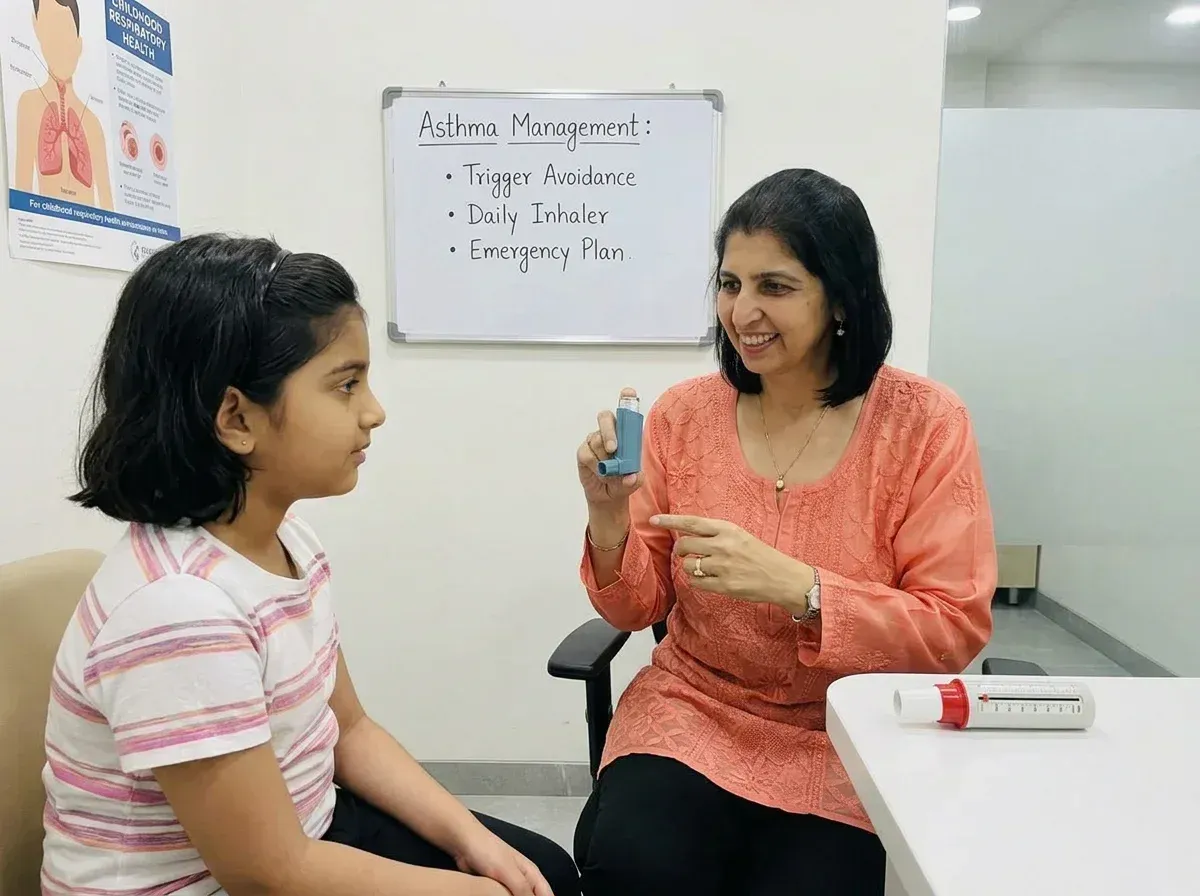
Step-based treatment follows GINA guidelines: mild persistent asthma is managed with low-dose inhaled corticosteroids (ICS) such as budesonide or fluticasone; moderate disease adds a long-acting beta-agonist (LABA) in a combination inhaler. Allergen immunotherapy (AIT) - either subcutaneous (SCIT) or sublingual (SLIT) - is the only disease-modifying option, reducing both symptoms and medication need over 3–5 years. Patients with severe eosinophilic or allergic asthma uncontrolled on high-dose ICS-LABA may qualify for biologic therapies such as omalizumab (anti-IgE) or mepolizumab (anti-IL-5).
See an allergist urgently if you use a reliever inhaler more than twice a week, wake at night with breathing difficulty, or have had any emergency asthma attack.
Frequently Asked Questions
Yes. Mumbai's vehicular exhaust, construction dust, and industrial emissions elevate PM2.5 and ozone, which irritate already-inflamed airways and increase the severity of allergic reactions to HDM and moulds. Wearing a well-fitted N95 mask on high-pollution days, keeping windows closed during peak traffic hours, and using an air purifier at home are practical steps alongside medical treatment.
Allergic asthma is driven by IgE-mediated hypersensitivity to specific allergens, confirmed by positive skin prick tests or specific IgE. Non-allergic asthma is triggered by irritants (cold air, exercise, pollutants) without an IgE component. The distinction matters because only allergic asthma patients are candidates for allergen immunotherapy and anti-IgE biologics like omalizumab.
Many children improve significantly in adolescence, but true 'outgrowing' is less common in atopic children with HDM and cockroach sensitisation - both unavoidable in Mumbai's urban environment. Early allergen immunotherapy can induce long-term tolerance and substantially improve the chances of remission.
Inhaled corticosteroids at recommended doses are very safe - the amount absorbed systemically is minimal. They are far safer than repeated courses of oral steroids. Regular use prevents permanent airway remodelling, which is a real risk of undertreated asthma. Your allergist will use the lowest effective dose and review it at every visit.
Allergen immunotherapy (AIT) is the only disease-modifying option - it involves administering gradually increasing doses of your specific allergens as injections (SCIT) or sublingual drops/tablets (SLIT) to reprogram your immune response. While asthma is chronic, treatment over 3 years significantly reduces symptoms, medication need, and provides benefits that persist for years after completing the course.
Take the next step
Living with allergic asthma? Let’s find your trigger.