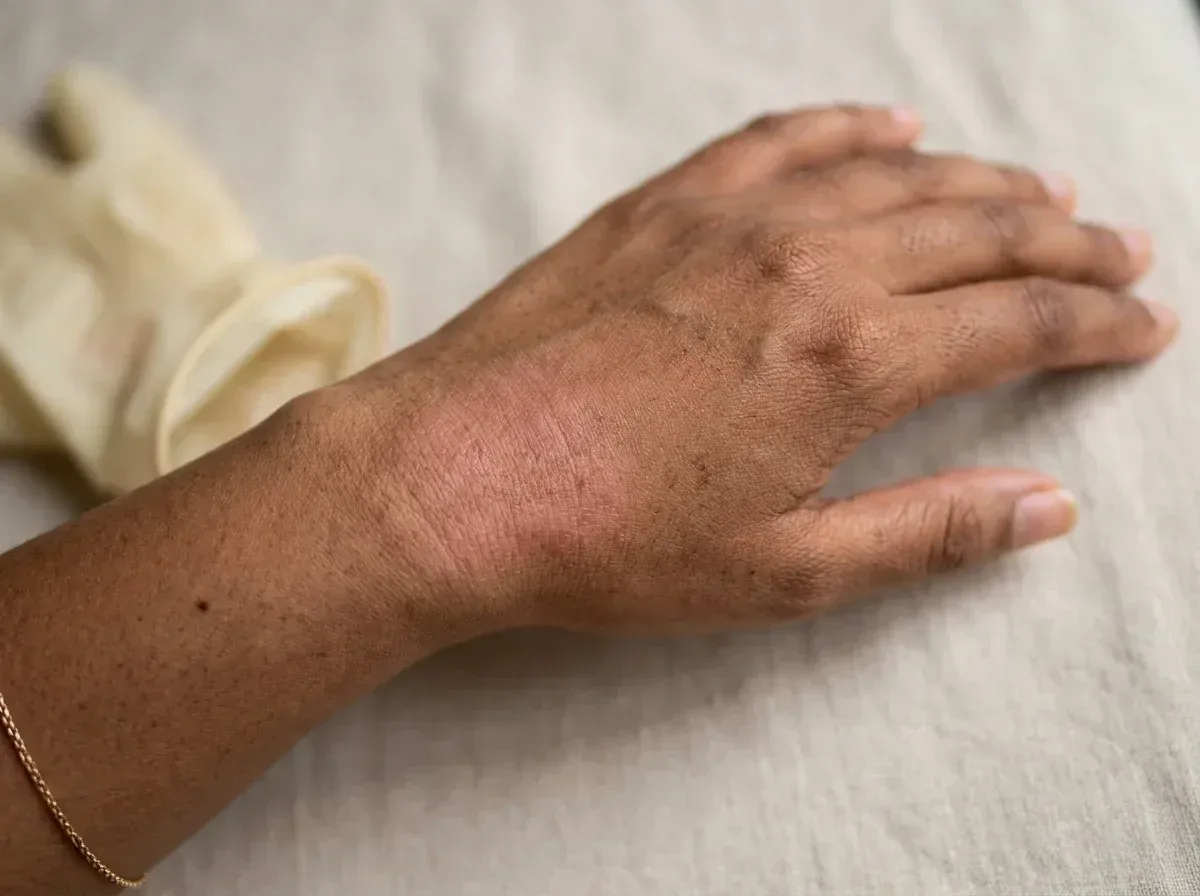
•Raised, red linear wheals appearing within minutes of scratching or rubbing the skin
•Itching or burning along the traced lines
•Wheals resolving within 15–30 minutes without treatment
•Worsening after hot showers, exercise, or emotional stress
•Symptoms aggravated by tight clothing, waistbands, bra straps, or jewellery
•Generalised itching of the skin before or without visible marks
•Interference with daily activities - inability to scratch insect bites without dramatic whealing
•Co-existing anxiety or stress worsening the skin’s reactivity
Causes & Triggers
Dermatographism occurs when mast cells in the superficial dermis degranulate excessively in response to mechanical stimulation, releasing histamine and causing localised whealing. The exact cause is unknown in most cases (idiopathic), but it can be triggered or worsened by thyroid disorders (especially Hashimoto’s thyroiditis), recent infections, elevated stress, and certain medications. In Mumbai’s climate, triggers are plentiful: heat and sweating lower the threshold for mast cell activation; synthetic fabrics trap sweat and cause continuous friction; harsh soaps and detergents - widely used in India - strip the skin barrier; and psychological stress from urban life is a well-documented aggravant.
How We Test
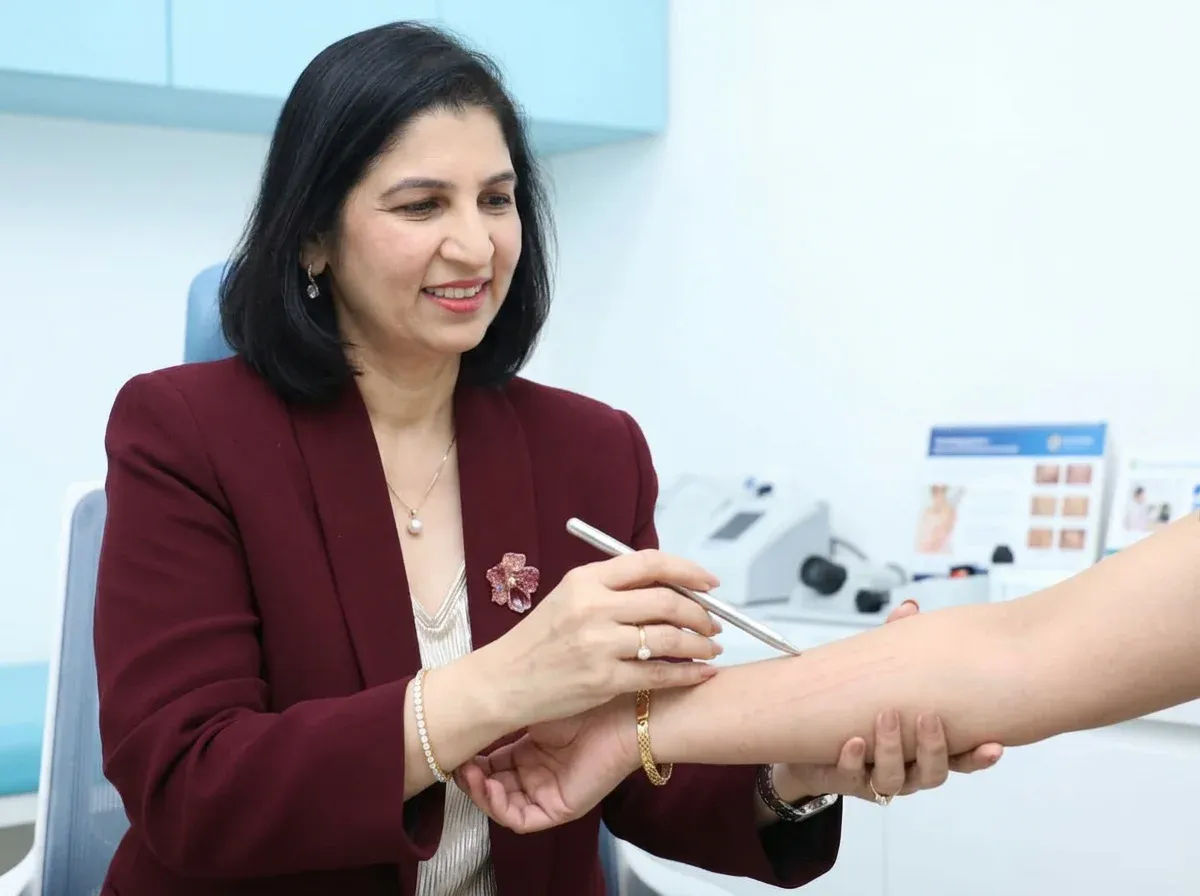
Diagnosis is clinical and straightforward: a tongue depressor or fingernail is firmly stroked across the forearm, and a positive test produces a raised weal along the stroke line within 3–5 minutes. A dermographometer can grade severity. Blood tests including thyroid function tests (TSH, free T4, anti-TPO antibodies), complete blood count, and CRP are ordered to exclude an underlying systemic cause. Allergy skin-prick tests are performed if a co-existing allergic condition is suspected.
Second-generation non-sedating antihistamines - particularly cetirizine, fexofenadine, or bilastine - taken once daily are the first-line and highly effective treatment. Higher doses (up to four times the standard dose, under medical guidance) are used in resistant cases. Skin care advice specific to Mumbai is important: switching to gentle, soap-free cleansers, using lukewarm rather than hot water for bathing, applying a fragrance-free moisturiser immediately after bathing, and wearing loose-fit 100% cotton clothing. For dermatographism driven by thyroid disease, treating the underlying thyroid condition often greatly improves the skin response.
Consult a specialist if dermatographism is causing significant daily itch, disrupting sleep, is accompanied by spontaneous hives, or does not respond to a trial of an over-the-counter antihistamine within four weeks.
Frequently Asked Questions
Dermatographism is not dangerous - it does not progress to anaphylaxis or cause organ damage. However, the persistent itching and whealing can significantly impair quality of life, disrupt sleep, and affect work and social activities. It is very responsive to antihistamine treatment in most patients.
In many cases yes - approximately 50% of patients with symptomatic dermatographism see spontaneous resolution within 1–2 years. However, in others it can persist for many years. Daily antihistamines control symptoms effectively, and treating any underlying thyroid condition dramatically improves the prognosis.
Absolutely. Psychological stress is a well-established trigger for mast cell activation and histamine release, lowering the threshold at which the skin reacts to mechanical stimulation. Patients in high-stress Mumbai urban work environments frequently notice their skin reactivity tracks their stress levels. Mindfulness, regular sleep, and exercise are useful complements to antihistamine therapy.
Loose-fitting, 100% cotton clothing is best - it minimises friction and allows the skin to breathe in Mumbai’s humid heat. Avoid synthetic fabrics (polyester, nylon), tight waistbands, underwire bras, jewellery with rough clasps, and watch straps. Washing new clothes before wearing them to remove chemical finishes also helps.
Thyroid disorders - particularly autoimmune Hashimoto’s thyroiditis - are found in a significant proportion of patients with chronic dermatographism and urticaria. Thyroid antibodies (anti-TPO) can independently stimulate mast cells, perpetuating skin reactivity. Identifying and treating an underlying thyroid problem often leads to significant improvement in dermatographism even if the thyroid hormone levels are normal.
Take the next step
Living with dermatographism? Let’s find your trigger.