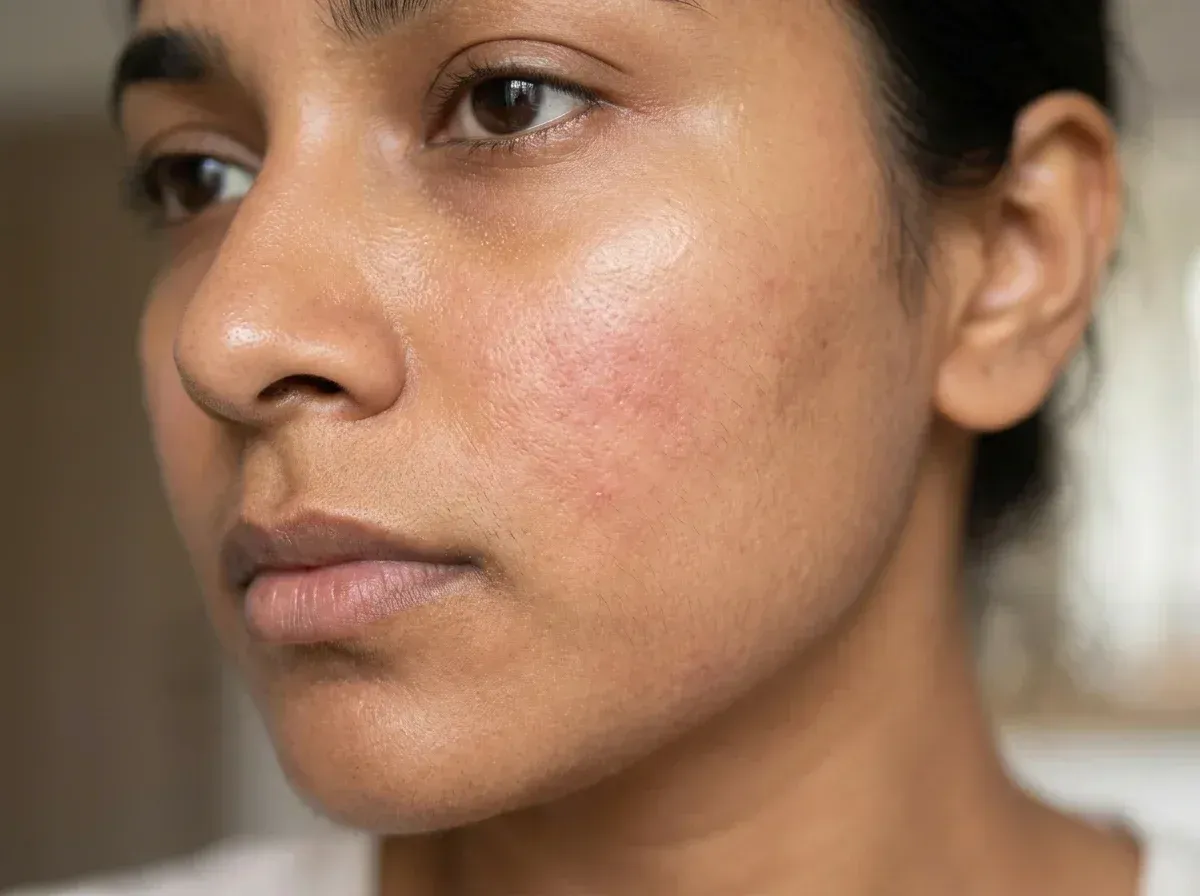
•Redness and itching at the site of product application
•Swelling of eyelids, lips, or face
•Burning or stinging sensation on skin
•Dry, scaly, or flaking skin patches
•Blistering or oozing in severe reactions
•Darkening or hyperpigmentation after repeated exposure
•Hives (urticaria) appearing within minutes of contact
•Chronic eczema-like rash on hands or face
Causes & Triggers
Cosmetic allergy in Mumbai is predominantly triggered by nickel in jewellery and metallic cosmetics, parabens and formaldehyde-releasing preservatives in moisturisers, para-phenylenediamine (PPD) in hair dyes widely used across Indian salons, and fragrances in perfumes and fairness creams. Mumbai's humid monsoon climate increases skin permeability, making sensitisation more likely. Heavy use of turmeric, sandalwood, and herbal home-remedy pastes - common in Indian households - can also cause photo-contact dermatitis. Skin-lightening creams containing mercury or hydroquinone, still sold over the counter in parts of India, are particularly common sensitisers seen in Mumbai clinic patients.
How We Test
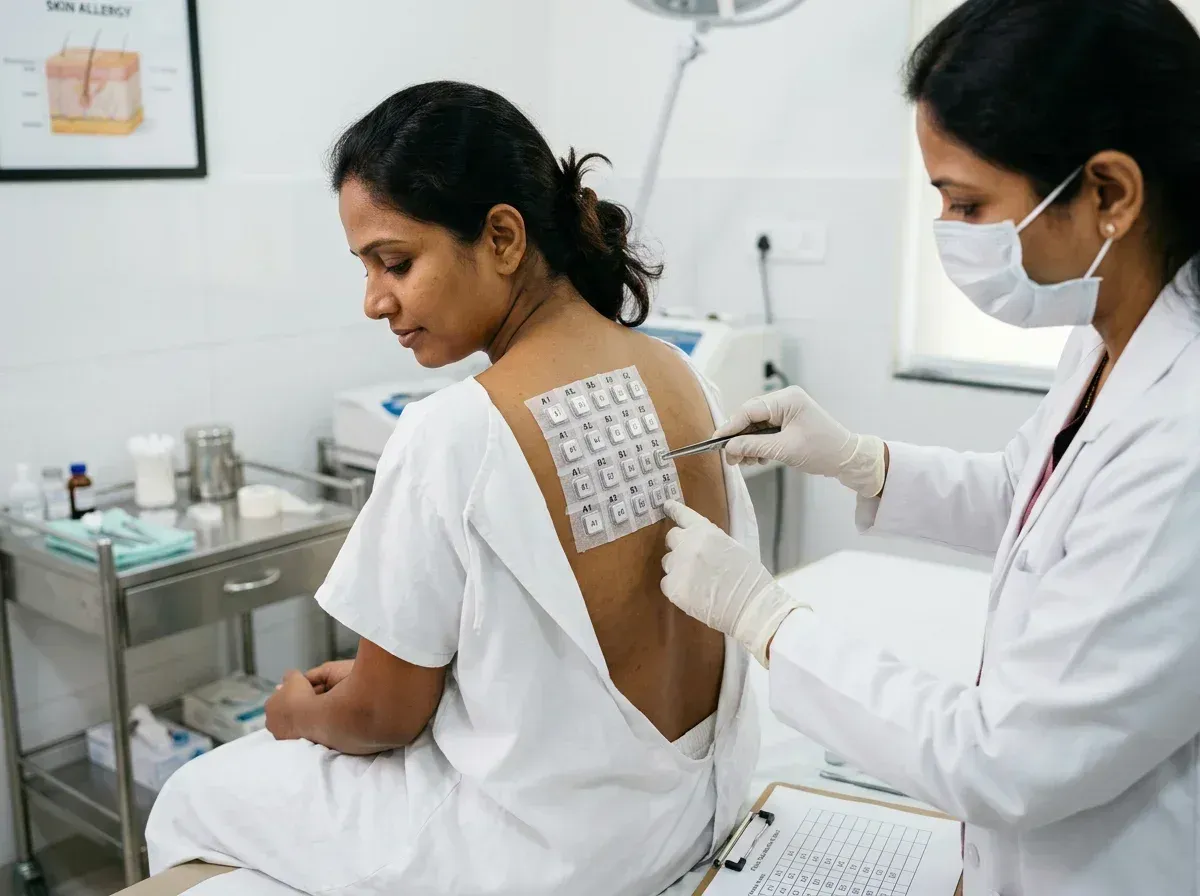
The gold-standard test is a patch test in which a standard European baseline series plus an Indian cosmetic allergen series of 30–50 allergens is applied to the upper back under occlusion for 48 hours, with readings at 48 and 96 hours. Photo-patch testing for sunscreen and fragrance photo-allergens may be added. Blood tests such as total IgE and specific IgE can help distinguish allergic contact dermatitis from irritant contact dermatitis or atopic eczema.
First-line treatment is strict avoidance of the identified allergen, guided by patch test results and a written list of safe ingredient alternatives. Acute flares are managed with topical corticosteroids combined with emollients to restore the skin barrier; oral antihistamines relieve itch. Severe or widespread reactions may require a short course of oral prednisolone, and chronic cases benefit from tacrolimus or pimecrolimus ointments as steroid-sparing agents.
Consult an allergist if a skin rash persists beyond two weeks, recurs with cosmetic use, or involves swelling of the eyes, lips, or throat.
Frequently Asked Questions
Irritant contact dermatitis appears quickly (minutes to hours) and feels more like a burn, while allergic contact dermatitis typically develops 24–72 hours after exposure and is intensely itchy. A patch test performed by an allergist is the only reliable way to confirm an allergy and identify the exact chemical culprit.
Yes. Sandalwood oil, turmeric (curcumin), henna, neem, and many botanical extracts used in traditional Indian cosmetics are well-documented contact allergens. 'Natural' or 'herbal' does not mean hypoallergenic, and patients in Mumbai who switch to herbal products thinking they are safer sometimes develop new sensitisations.
Hair dye allergy - usually to PPD - is one of the most frequent cosmetic allergies seen in Mumbai salons. Once sensitised, even small exposures can trigger severe facial swelling. Patch testing identifies which dye components to avoid; some patients can safely use PPD-free plant-based dyes such as pure henna (without black henna additives), but this should be confirmed with an allergist.
Many over-the-counter fairness creams sold in India contain mercury, hydroquinone, fragrances, and steroids - all potent sensitisers. Prolonged use can cause a persistent pigmented contact dermatitis that is difficult to reverse. An allergist can test these products and recommend safe alternatives.
Patch test panels are applied to your upper back on Day 1, removed on Day 3, with a final reading on Day 4 or 5. The procedure is not painful - small aluminium discs containing diluted allergens are taped to unbroken skin. You should avoid sweating and wetting your back during the test period, so it is best planned outside Mumbai's monsoon months.
Take the next step
Living with cosmetic allergy? Let’s find your trigger.