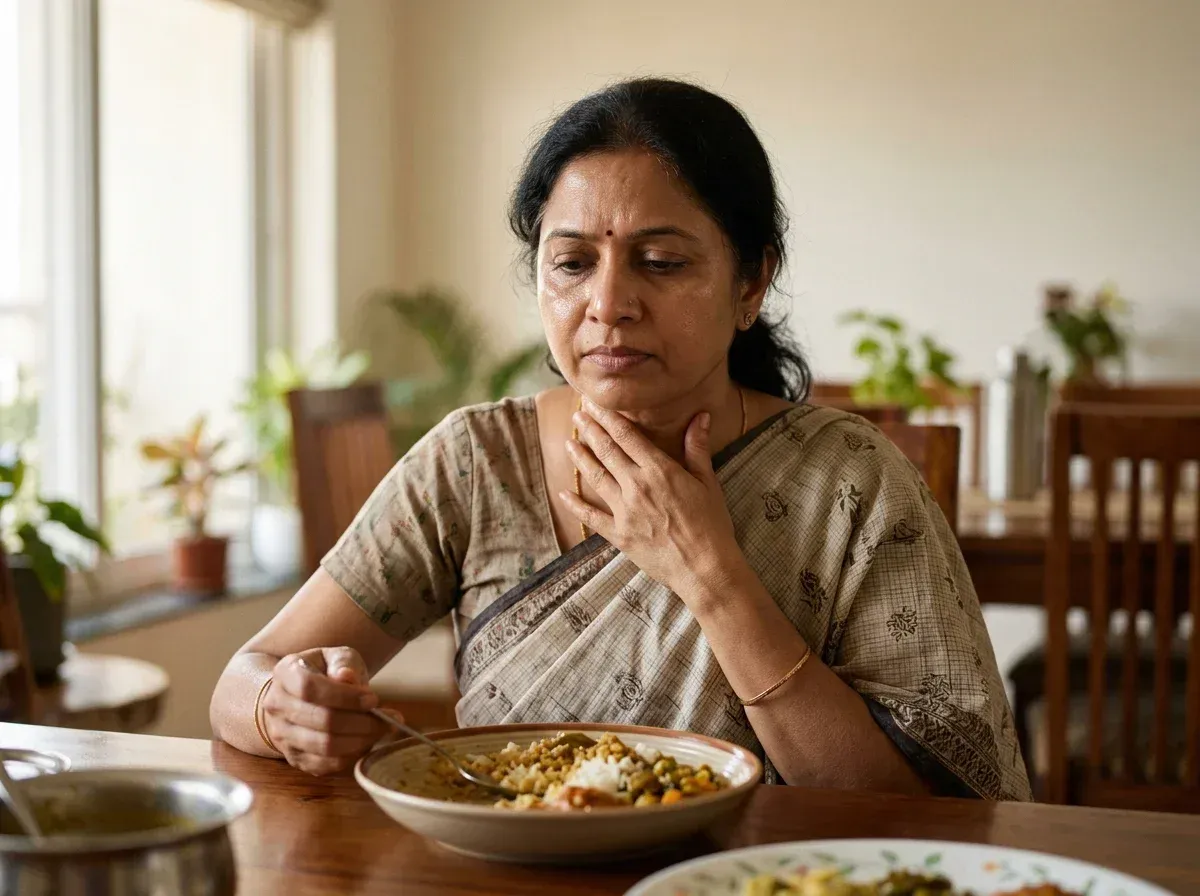
•Difficulty swallowing solid foods (dysphagia), especially meat, bread, and rice
•Food getting stuck in the chest or throat (food impaction)
•Chest pain or pressure not related to the heart
•Heartburn unresponsive to standard antacid or PPI therapy
•Regurgitation of undigested food
•Abdominal pain, particularly in children
•Poor appetite, failure to thrive, or weight loss in children
•Nausea or vomiting, especially in paediatric patients
Causes & Triggers
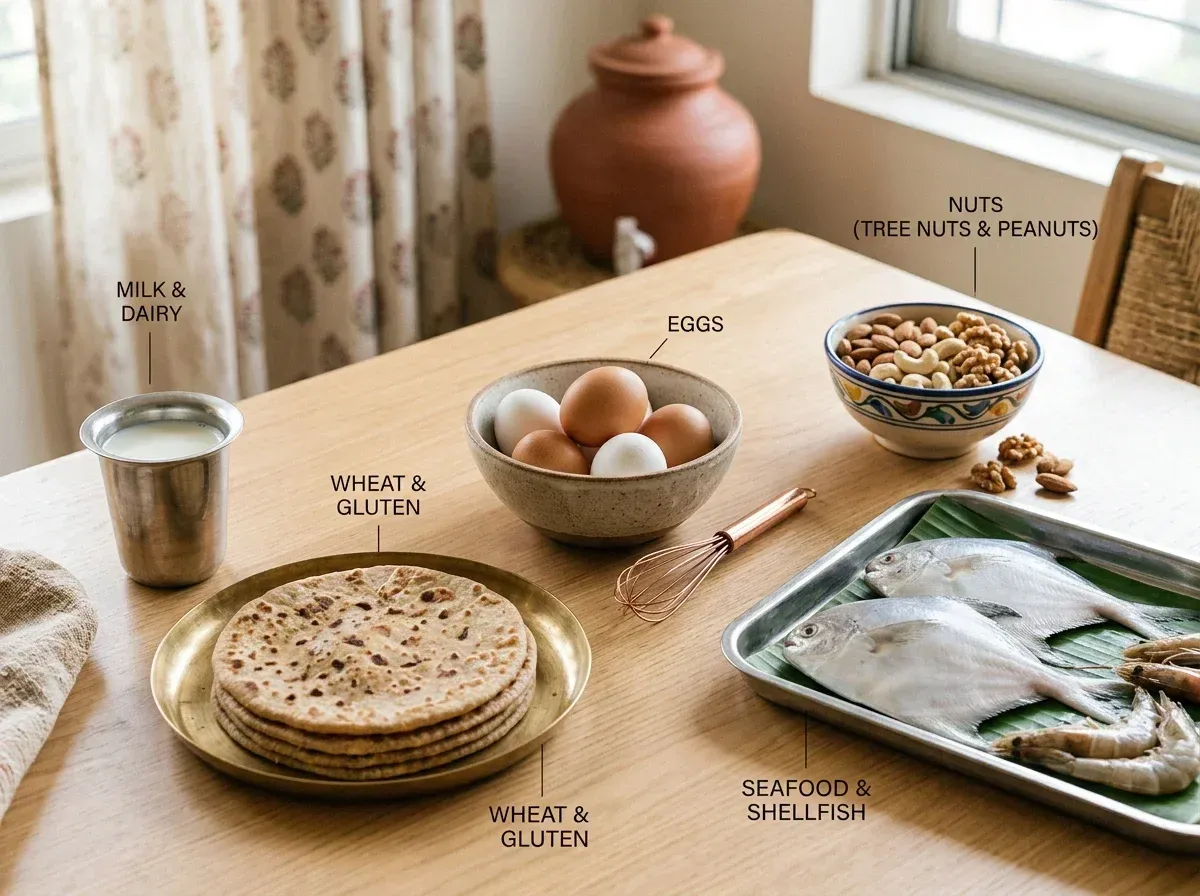
Eosinophilic oesophagitis (EoE) is driven by both food and environmental allergens triggering a type-2 eosinophilic immune response in the oesophageal lining. The six most implicated food triggers worldwide - milk, wheat, eggs, soy, nuts, and seafood - are all highly prevalent in Indian diets, making EoE underdiagnosed rather than rare in India. Mumbai's year-round high aeroallergen exposure (HDM, moulds, pollens) contributes to the environmental allergen component, as EoE frequently co-exists with allergic rhinitis, asthma, and atopic eczema.
How We Test
EoE diagnosis requires upper gastrointestinal endoscopy with multiple oesophageal biopsies (at least 2–4 per oesophageal segment) showing ≥15 eosinophils per high-power field after a PPI trial, per international consensus guidelines. Endoscopic findings include oesophageal rings (trachealization), white exudates, linear furrows, and strictures. Allergy evaluation - skin prick testing, specific IgE, and atopy patch testing for food allergens - guides dietary treatment.
The three evidence-based pillars of EoE treatment are dietary therapy, pharmacological therapy, and endoscopic dilation. Dietary therapy using a 6-food elimination diet (removing milk, wheat, egg, soy, nuts, seafood) achieves remission in ~70% of patients; an empirical 2-food elimination (milk + wheat) is increasingly preferred as a first step. Pharmacological options include swallowed topical corticosteroids (budesonide orodispersible tablet). Oesophageal strictures causing food impaction are treated by endoscopic balloon dilation. The biologic dupilumab (anti-IL-4Rα) is approved for EoE in adults and is available in India for severe refractory cases.
Consult a gastroenterologist or allergist if you have difficulty swallowing solid food that has persisted beyond a few weeks, or if food has ever become stuck requiring emergency removal.
Frequently Asked Questions
EoE and GORD can both cause heartburn and chest discomfort, but they are distinct conditions. GORD results from acid washing back into the oesophagus and responds well to proton pump inhibitors (PPIs). EoE is an immune-driven eosinophilic inflammation that does NOT reliably respond to PPIs and requires endoscopic biopsy confirmation and specific treatment. Many EoE patients are initially misdiagnosed with GORD and treated incorrectly for years.
Food impaction in EoE is the sensation of solid food - most often meat, bread, or rice - becoming lodged in the mid-chest or throat and not passing down despite swallowing attempts. It can last minutes to hours and may require emergency endoscopic removal. Over time, untreated inflammation causes oesophageal fibrosis and strictures that worsen impaction frequency.
Studies in South Asian populations identify cow's milk (dairy) and wheat as the most common triggers - both central to Indian diets in items like roti, dalia, paneer, curd, and mithai. Eggs, soy (used in many processed Indian snacks), tree nuts (cashew, almond), and shellfish are also frequent culprits. Systematic elimination and reintroduction under allergist supervision is the correct approach.
EoE is currently considered a chronic condition that requires long-term management, but most patients achieve excellent symptom control and prevent oesophageal damage with dietary modification and medication. Emerging biologic therapies like dupilumab offer promising long-term disease modification. Regular endoscopic monitoring assesses disease activity.
The most common triggers worldwide are dairy, wheat, egg, soy, peanuts/tree nuts, and fish/shellfish. In Indian patients specifically, cow's milk and wheat - consumed daily in chapati, paneer, and dahi - are the most frequently identified culprits. Allergy patch testing and guided food reintroduction confirm the individual trigger foods.
Take the next step
Living with eosinophilic esophagitis? Let’s find your trigger.