
No. A food allergy involves the immune system (IgE antibodies) and can cause immediate, life-threatening systemic reactions like anaphylaxis. A food intolerance is digestive, typically due to difficulty processing a food (such as lactase enzyme deficiency in lactose intolerance), and causes gut discomfort without triggering an immune reaction.
Back to blog
Diet & Food
Can Food Allergy Be Cured? The Shift from Strict Avoidance to Oral Immunotherapy (OIT)
Reviewed by Dr. Sunita Chhapola Shukla
Published: 2 April 2026
Updated: 20 May 2026
6 min read
Clinical Summary
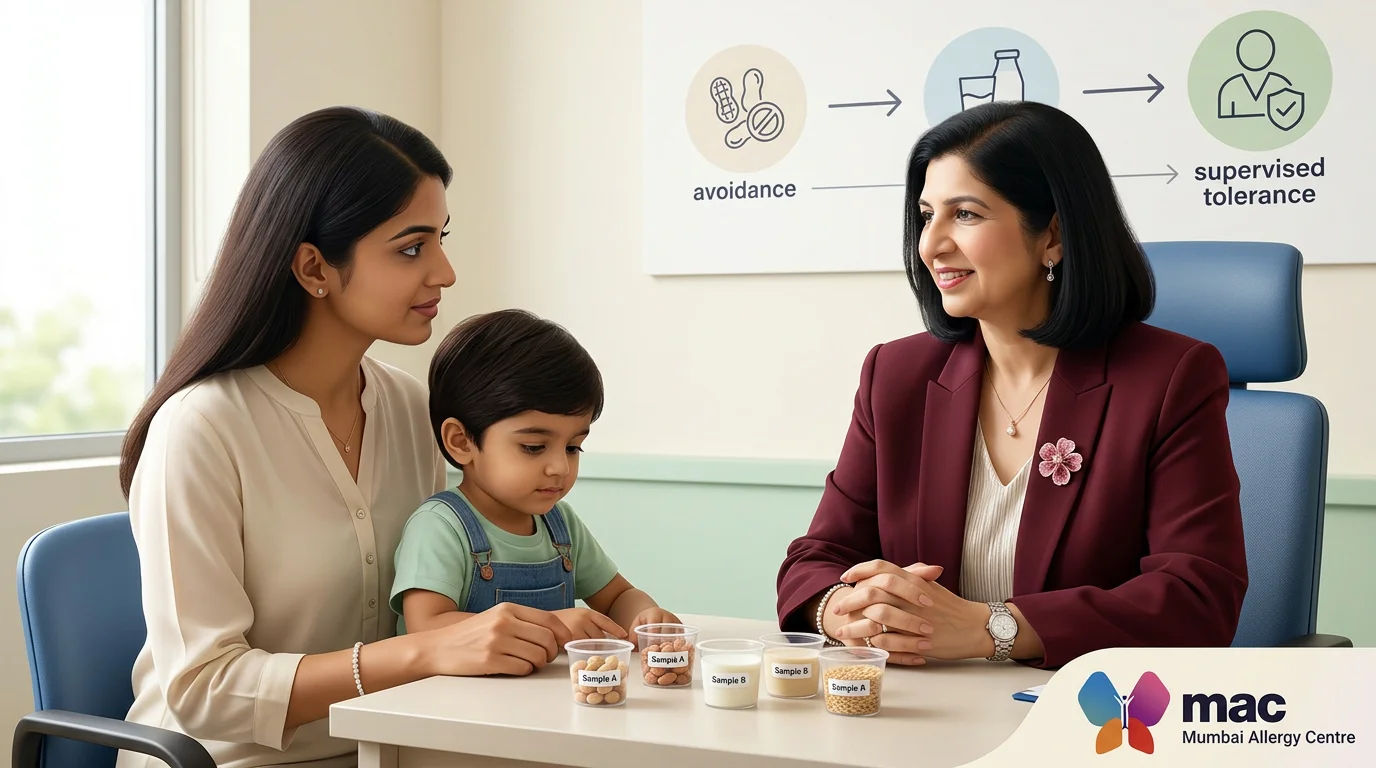
For years, strict avoidance was the only answer for food allergies. Today, advanced diagnostics and Oral Immunotherapy (OIT) are changing the game, allowing patients to build tolerance.
For decades, the standard medical advice for anyone diagnosed with a food allergy was simple and uncompromising: 'Strict avoidance.' If you are allergic to peanuts, milk, or shellfish, you must never eat them, read every food label with extreme caution, and carry an emergency adrenaline auto-injector. However, this passive strategy is shifting. Today, advanced diagnostics and Oral Immunotherapy (OIT) are helping patients build active tolerance, transforming how we treat food allergies.
The Clinical Shift: Defining 'Cure' vs. 'Desensitization'
In clinical immunology, it is important to distinguish between a permanent cure (spontaneous resolution of the allergy) and desensitization. Spontaneous resolution is common in children; many naturally outgrow early childhood allergies to cow's milk, egg, wheat, and soy by the time they reach school age. However, allergies to peanuts, tree nuts, fish, and shellfish are typically lifelong.
Oral Immunotherapy (OIT) does not immediately alter the genetic coding of your allergy, but it induces a state of active desensitization. Through daily consumption of gradually increasing, precise amounts of the offending food, we raise the threshold of allergen required to trigger a reaction. This protects patients from accidental exposure, the trace cross-contamination in restaurants that otherwise triggers life-threatening anaphylaxis. A medically supervised Food Challenge Test is critical to establish the baseline dose.
“The goal of modern food allergy treatment is not necessarily to allow patients to eat large bowls of peanuts, but to build a safety buffer. Desensitization means a trace amount of allergen will no longer trigger an emergency room visit.”— Dr. Sunita Chhapola Shukla
The Role of Component-Resolved Diagnostics
Before beginning any food reintroduction, we must assess the exact proteins causing the reaction. Traditional skin prick and whole-allergen blood tests confirm the presence of antibodies, but they cannot predict the severity of a reaction. At Mumbai Allergy Centre, we use Component-Resolved Diagnostics (CRD), molecular allergy blood tests that break down food into individual proteins:
- Peanut Ara h 2: Hypersensitivity to this specific storage protein indicates a high risk of severe systemic anaphylaxis, requiring extreme caution.
- Peanut Ara h 8: This protein is cross-reactive with birch pollen. Sensitization to Ara h 8 typically leads to mild, localized oral allergy syndrome (itching in the mouth) rather than severe reactions, indicating a much safer prognosis.
- Milk Casein vs. Whey: Casein is heat-stable, meaning patients sensitized to casein react to baked milk as well. Whey proteins (lactalbumin) are heat-labile; patients sensitized only to whey can often eat baked goods (like cakes or cookies) safely.
How Oral Immunotherapy (OIT) is Safely Conducted
OIT is a highly structured medical protocol that must never be attempted at home without direct specialist supervision. The process involves three key stages:
- Initial Dose Escalation: Performed in-clinic over a full day. We determine the extremely low starting dose (often less than 1 milligram of allergen protein) that the patient can tolerate.
- Home Dosing & Bi-weekly Escalations: The patient takes the tolerated dose daily at home. Every 2 weeks, they return to the clinic to receive a slightly higher dose under observation. This build-up phase lasts 6 to 12 months.
- Maintenance Phase: Once the target maintenance dose is reached (equivalent to 1-2 peanuts or a cup of milk), the patient continues to consume this exact amount daily to maintain their desensitized state.
Summary: The Medical Verdict
Can food allergy be cured? Spontaneous recovery is common for milk and egg in children. For lifelong allergies, Oral Immunotherapy (OIT) represents the closest medical option to a cure, providing patients with a vital safety buffer against severe accidental reactions and allowing them to dine out with peace of mind. To confirm the diagnosis, check our detailed guide on the Food Challenge Test in Mumbai.

Author & Clinical Reviewer
Dr. Sunita Chhapola Shukla
Director of Mumbai Allergy Centre
MS (ENT), DNB, DAA (Gold, Harvard/Boston Food Allergy Centre)
Cited Sources & Medical References
- Vickery, B. P. et al. (2018). 'AR101 Oral Immunotherapy for Peanut Allergy in a Randomized Phase 3 Trial.' New England Journal of Medicine, 379(21), 1991-2001.
- Sampson, H. A. et al. (2020). 'Food allergy: A practice parameter update-2020.' Journal of Allergy and Clinical Immunology, 146(6), 1279-1294.
- European Academy of Allergy and Clinical Immunology. (2022). 'Guidelines on Oral Immunotherapy for IgE-Mediated Food Allergy.'
Q&A
Frequently Asked Questions
Medical clarifications directly from Dr. Sunita Shukla
Frequently Asked Questions
Food OIT is most successful when started early. Clinical guidelines recommend evaluating children for OIT starting from preschool age (4 to 5 years), though early intervention in infants with mild, graded introductions is also showing excellent preventative success under specialist supervision.
Take Control of Your Health
Don't let allergies hold you back. Consult Dr. Sunita Shukla.
Confirm your allergen triggers with standard in-clinic diagnostics and get a long-term desensitization plan.